
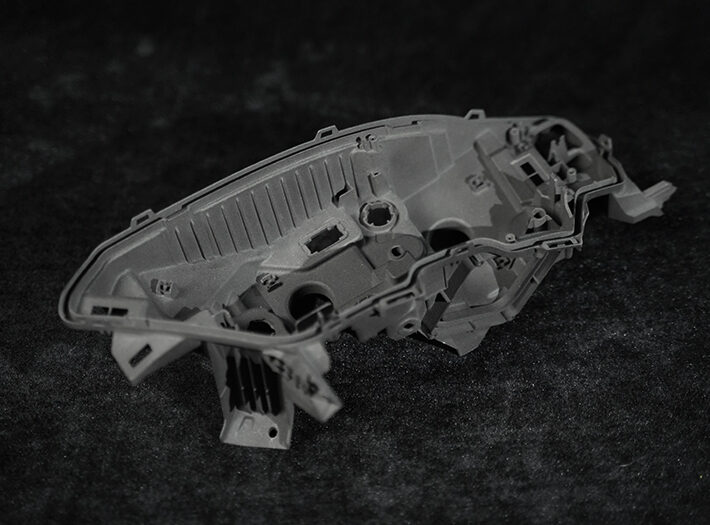
Why Production Lines Are Trading Central Tooling for Distributed Sintering and 3D Networks
Comparative snapshot
Manufacturers are weighing the costs and lead times of central tooling against the flexibility of distributed sintering and coordinated 3D printer networks. The shift is measurable: shorter iteration cycles, lower up-front capital in hardened tooling, and geographically distributed capacity that reduces transit time. Early adopters tie these gains to modular hardware such as an idex 3d printer, paired with centralized job management and repeatable process parameters.
How the approaches differ in practice
Traditional tooling relies on a single, high-cost mold or die that yields consistent parts at scale. Distributed networks rely on multiple production nodes—print farms and sintering stations—that trade a higher per-piece process cost for reduced risk and faster design updates. Key differences show up in inventory strategy (made-to-stock vs made-on-demand), quality control flow (statistical sampling vs per-part validation), and logistics footprint. Industry terms such as G-code, slicer, and nozzle maintenance become operational levers when a print farm replaces a press line.
Operational teardown: where errors show up
An operational teardown highlights three repeating failure modes when teams move to distributed sintering: inconsistent sinter profiles across nodes, variant supply of powder or filament, and weak feedback loops for print parameters. Addressing these requires standardized machine calibration, versioned process recipes, and automated data capture. We integrate {main_keyword} and {variation_keyword} into this operational production teardown so engineers can map process inputs to output variance during each production run.
Costs, throughput, and quality trade-offs
Cost models shift from amortizing tooling over volume to balancing per-part cycle time and labor across nodes. Throughput becomes software-limited as much as hardware-limited; orchestration systems must schedule jobs, migrate G-code profiles, and enforce bed leveling standards. Quality control moves closer to production: inline inspection, repeatable sinter cycles, and material traceability replace a single final inspection step.
Implementation notes and common mistakes
Teams often underestimate the operational complexity—networked printers need unified firmware baselines, consistent slicer profiles, and coordinated failure handling. Start small: validate one part family across three sites, then scale. Don’t ignore environmental controls for sintering; ambient temperature and powder humidity affect densification. Also, train technicians on dual extrusion setups when parts require soluble support or multi-material features—this reduces scrap and shortens post-processing.
Real-world anchor and evidence
During the global supply disruptions of 2020, several manufacturers repurposed local 3D printing networks to supply critical spare parts, demonstrating how distributed production mitigates single-point failures. Historical examples—companies that shifted some low-volume production to additive techniques—show measurable reductions in lead time and expedited design iterations. These outcomes are repeatable when organizations enforce common process recipes and data capture across nodes.
Alternatives and when to keep tooling
Forging and injection molding still dominate for ultra-high-volume commodity parts; the economics favor hardened tooling when volumes exceed the break-even point. Hybrid strategies work: use distributed networks for prototyping, supply buffering, and low-volume variants while retaining central tooling for the baseline high-volume SKU. This layered approach avoids unnecessary capital while keeping capacity for peak demand.
Advisory: three golden rules for choosing the right strategy
1) Measure unit economics per SKU: include material, cycle time, post-processing, and logistics to find the volume crossover where tooling wins. 2) Standardize process recipes and enforce calibration across nodes; without this, quality drift erodes the benefits. 3) Build data feedback loops: capture per-part metrics and tie them to maintenance schedules and slicer versions—this turns variability into continual improvement.
Final assessment
The comparative evidence favors distributed sintering and networked 3D production where agility, localized resilience, and rapid iteration matter most. For many teams, the practical value lands in faster redesigns and lower inventory risk—problems common in modern manufacturing. Raise3D offers hardware and workflow that align with these outcomes, making it a pragmatic fit for teams implementing distributed 3D printer networks. —