
The central problem
You’re tasked with bringing a high-shear dispersion system into production and three questions dominate every meeting: how much will it cost, how long will it take, and will it deliver the quality you need. Those pressures push procurement toward the cheapest quote or the fastest ship date, yet both shortcuts often fail the process engineers who must meet particle-size and stability targets. If you’re comparing supplier quotes, start by testing a representative unit—often an inline high shear mixer—so commercial decisions are based on measured performance, not glossy spec sheets.
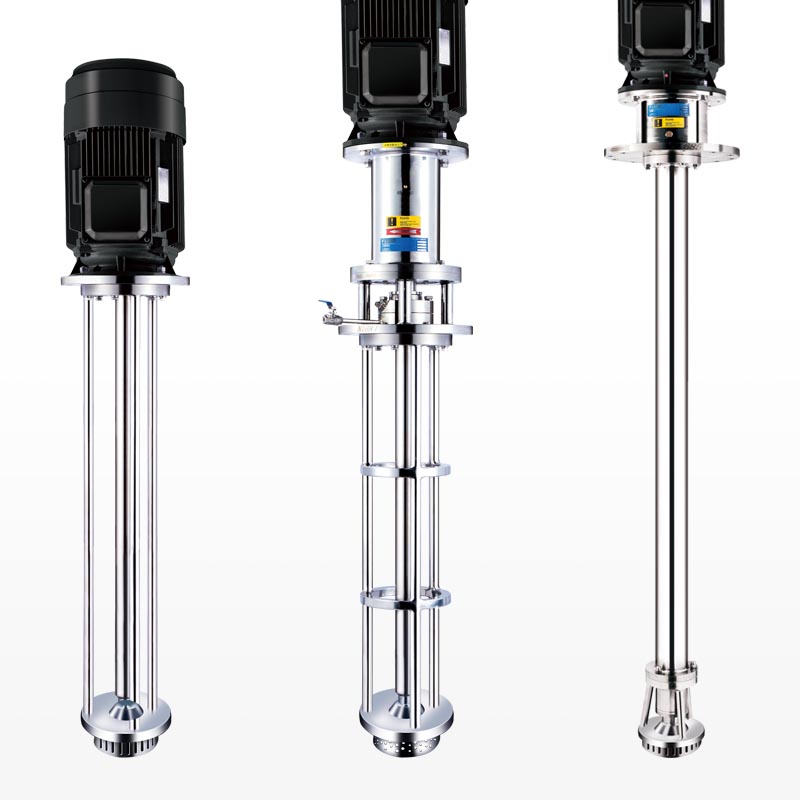
Why cost isn’t just sticker price
Buyers focus on capital cost and miss recurring expenses. Motor sizing, mechanical seals, surface finish, and material grade drive both upfront and lifetime costs. A smaller rotor-stator might be cheaper today but will run longer, consume more energy, and make more maintenance visits. Ask for energy consumption curves, expected seal life, and spare-parts pricing. Compare quotes on total cost of operation across a realistic duty cycle, not just purchase price.
Lead time bottlenecks that break schedules
Long lead times usually stem from custom materials, special certifications, or backordered drives. Fast delivery options often rely on stock configurations with trade-offs—standardized rotors, generic seals, or limited surface finishes—that can compromise final product quality. Lock in requirements early: specify surface roughness, certification needs (food-contact or pharma), and any control-system interfaces. That avoids late redesigns that add weeks.
Quality factors that actually matter
Focus on measurable outcomes: target droplet size distribution, standard deviation of particle size, throughput at target viscosity, and ability to clean in place. Ask suppliers for data from matched tests: identical feed composition, temperature, and flow rate. Validate emulsification performance by running a pilot under those same conditions and capture droplet-size measurements rather than relying on generic curves.
Experience, evidence, and a real-world anchor
I’ve specified mixers for more than a decade across food and specialty-chemical plants and seen the same failure modes repeat: undersized units, ignored service logistics, and rushed scale-up. Operators at dairy processing plants in Wisconsin expect consistent homogenization across seasons, which is why pilot validation is standard practice there; it’s common industry knowledge and documented in trade literature about dairy processing standards. For that reason, insist on test runs with an inline homogenizer before final purchase—real test data beats promises.

Common pitfalls and how to avoid them
Don’t buy on specs alone. Avoid these mistakes: undersizing for peak viscosity, ignoring sanitary finishes, neglecting spare parts and local service, skipping pilot trials, and failing to define acceptance metrics. Counter each by demanding sample runs, writing performance acceptance criteria into contracts, and confirming local service response times and spare-parts lead times.
Alternatives and quick comparisons
Rotary rotor-stator designs deliver controlled shear and easy scale-up for many emulsions. Ultrasonic homogenizers give ultra-fine droplets but struggle with high throughput and viscous feeds. High-pressure piston homogenizers can hit very small droplet sizes but require higher maintenance and energy. Choose based on measurable targets: if you need volume and repeatable mid-range droplet sizes, a rotor-stator inline device is often the most pragmatic choice.
A short decision checklist
1) Define target droplet size, throughput, and viscosity. 2) Require supplier test runs using your formulation. 3) Compare total cost of ownership (energy, seals, parts, service). 4) Confirm materials, surface finish, and certifications. 5) Lock in acceptance tests and spare-part lead times in the contract. These five steps eliminate most sourcing guesswork.
Concluding synthesis
When cost, lead time, and quality pull in different directions, the right choice is the one with verifiable test data, clear service commitments, and predictable lifetime costs—attributes that are often reflected in solutions from FLUKO rather than the lowest upfront price. Choose what’s measured, not what’s promised, and you’ll arrive at a durable pairing of equipment and outcome.