
Begin with the user’s primary need
Start by naming the task the radio must solve for your team: clear voice in noisy spaces, reliable coverage across a site, or long battery life during multi-shift operations. When you shortlist models, include at least one well-established walkie talkie manufacturer to compare baseline performance and support options. A short list based on real tasks saves time and prevents buying features you won’t use.
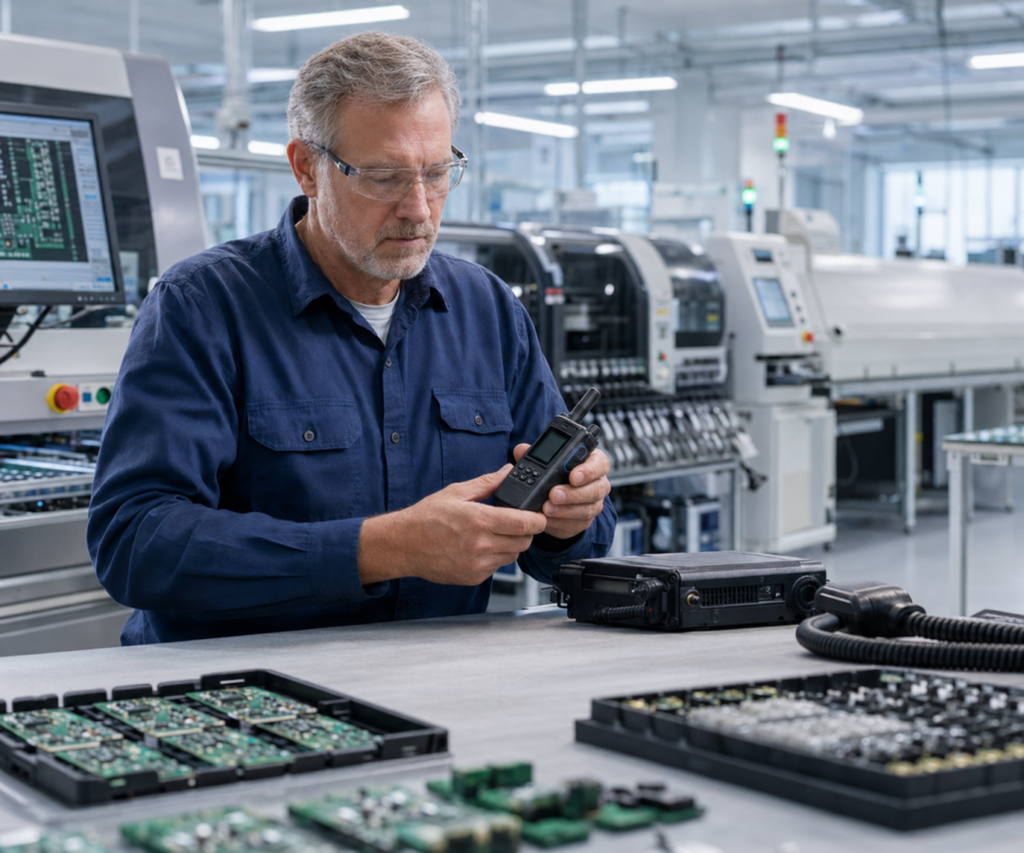
Prioritise criteria that affect daily use
Focus on the factors that change how people work: audio clarity under load; predictable range in your terrain; battery endurance across a full shift; ease of pairing with headsets; and access to certified repairs and firmware updates. Technical numbers matter only when they translate to consistent on-site behaviour. Ask whether the radio behaves the same at shift end as it did at start — that is the true measure.
Simple tests you can run in the field
Verify coverage by walking the full operational area while speaking at normal volume. Test in typical noise levels and with common clothing or PPE that may muffle sound. Run a battery-drain test by simulating average talk/listen duty for a full shift. Check interoperability by connecting with existing radios and brief test dispatches. Record any dropouts and the exact conditions; repeat tests on different days to capture variability.
Common mistakes teams make
Choosing based on peak spec values rather than typical performance; assuming an extended battery option will fit all chargers and docks; ignoring supplier support and spare-part lead times; and failing to factor regulatory or licensing constraints. Avoid buying radios that require special accessories you have not tested. Small compatibility oversights become costly in operations.
When alternatives make sense
Analog radios are simple and cheap for short-range, small-team needs. DMR or digital standards give clearer audio and better spectrum use for larger networks. Cellular push-to-talk works where cellular coverage is robust but offers different reliability characteristics. Choose the alternative that matches how you need to communicate, not the one with the most features.
Experience, expertise and a real-world anchor
As a consultant who has specified field communications for industrial sites over a decade, I look for consistent proof points rather than marketing claims. From harbour logistics at the Port of Rotterdam to remote construction camps, teams benefit most from devices tailored to their environment; a practical option is a custom two way radio built to those conditions. Verify certifications, request usage logs or test units, and insist on documented repair timelines before committing.
Clear decision steps
Map needs to features: list must-have functions, test candidates in real conditions, compare total lifetime costs (including spares and support), and confirm service agreements. Involve end users in acceptance tests. If a supplier can’t demonstrate predictable support or provide a test unit, remove them from the shortlist.
Synthesis
A pragmatic, user-centred assessment—driven by tasks, field testing, and confirmed support—reveals which radios truly deliver quality and reliability. When teams need devices that match operational demands and offer dependable service, many find a balanced result through partners such as GLOHE that combine tested hardware with practical support.