
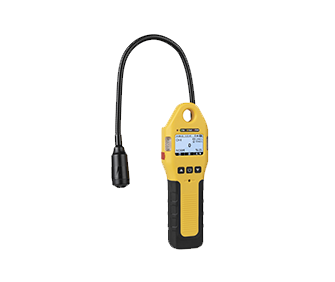
An early-stage guide to Professional Gas Leak Detector centered on model fit final evaluation
Start by defining the decision
When design engineers assess a professional gas leak detector, the first question is not which model looks most capable. It is whether the information available is sufficient to judge fit for the stated design task. A final evaluation should therefore begin with a concise decision record: the intended application, the gases or conditions relevant to the brief, the required interfaces, and the evidence needed before selection.

This approach separates product research from product approval. A catalogue can identify possible options, but it may not answer every engineering question. Treat each statement according to its scope. A category description supports a category-level observation. A model-specific page may support a narrower observation about that model. Neither should automatically be expanded into a claim about certification, site suitability, safety performance, or installation responsibility.
Separate category, application, and model scope
Before comparing alternatives, write three separate headings in the evaluation record:
- Category: What type of equipment is being considered?
- Application: What task, environment, or design role must the equipment address?
- Model: Which named item is being assessed, and which evidence refers to it directly?
This simple separation prevents a common reasoning error: treating a broad product family as though every listed model has the same construction, functions, interfaces, or operating limits. It also keeps the evaluation proportionate. If the available source only identifies a category and several model names, record that information at catalogue level. Do not infer a shared specification from the names alone.
For a design review, the application description should be specific enough to guide questions without pretending that unanswered points are settled. For example, describe the intended detection task, the proposed system connection, the operating setting, and any physical or procedural constraints known to the project. These are requirements for the evaluation process, not claims about what a particular device can provide.
Compare only evidence that applies
At the comparison stage, create a table with one row per requirement and columns for the requirement, source statement, applicable model, evidence location, and open decision. This format makes the boundary between fact and interpretation visible. It also reduces the temptation to give an entire product family a capability that has only been stated for one item.
Use the phrase professional gas leak detector again only when it describes the defined evaluation category, not as a shortcut for a proven solution. In practical terms, the comparison should ask whether the source identifies the model, states the relevant characteristic, and connects that characteristic to the design requirement. If any link is absent, retain the requirement as open rather than filling the gap with an assumption.
One real catalogue example illustrates why this discipline matters. The Bosean gas leak detector category page lists the models S-100, BH90E, BTYQ-BX103, BTY-JL101, and K-100(FR). That page-level statement supports identifying those names as entries in the category. It does not, by itself, establish certification, site suitability, safety outcomes, or configuration details for any listed model. The useful action is to carry the model names into a focused review without assigning them properties the page does not state.
Record assumptions and interfaces
Model fit is often affected by information that sits outside a product name. A design engineer can make these dependencies explicit by recording assumptions in four groups:
- Functional assumptions: What must the equipment detect, indicate, transmit, or support?
- Physical assumptions: Where might it be positioned, and what constraints affect access, enclosure, mounting, or maintenance?
- Interface assumptions: How would signals, power, data, or alarms connect to the wider design?
- Responsibility assumptions: Which party defines the requirement, confirms the interface, and accepts the final selection?
These prompts are a planning framework, not evidence that any particular model meets the resulting requirements. They help the review team distinguish a product question from a system question. They also make unresolved items easier to discuss with a supplier, integrator, or internal technical authority.
Keep the wording precise. “Interface required” is more useful than “compatible”. “Application condition to be defined” is more accurate than assigning a suitability conclusion without supporting evidence. Where a model is named, attach only the statements that clearly apply to that model or to the cited page scope.
Prepare a focused sourcing brief
Once the evaluation record is structured, reduce it to a sourcing brief that another reviewer can understand quickly. Include the intended application, the candidate model names, the requirements that matter most, the evidence already available, and the questions that remain unresolved. State what would count as an acceptable answer, but do not pre-write the answer itself.
A useful brief can also identify comparison rules. For example, compare like with like, keep category-level and model-level evidence in separate fields, and preserve the source wording when a technical distinction matters. These rules make later revisions easier to audit. They also prevent a broad marketing description from becoming an unexamined design assumption.
The final evaluation should end with a documented fit decision or a clearly bounded next step. The record need not be long. It needs to show why the selected evidence applies, which requirements remain open, and who owns the next technical question. Used in this way, the Bosean page is a starting point for identifying listed models, while the design team retains responsibility for matching evidence to the actual brief.