
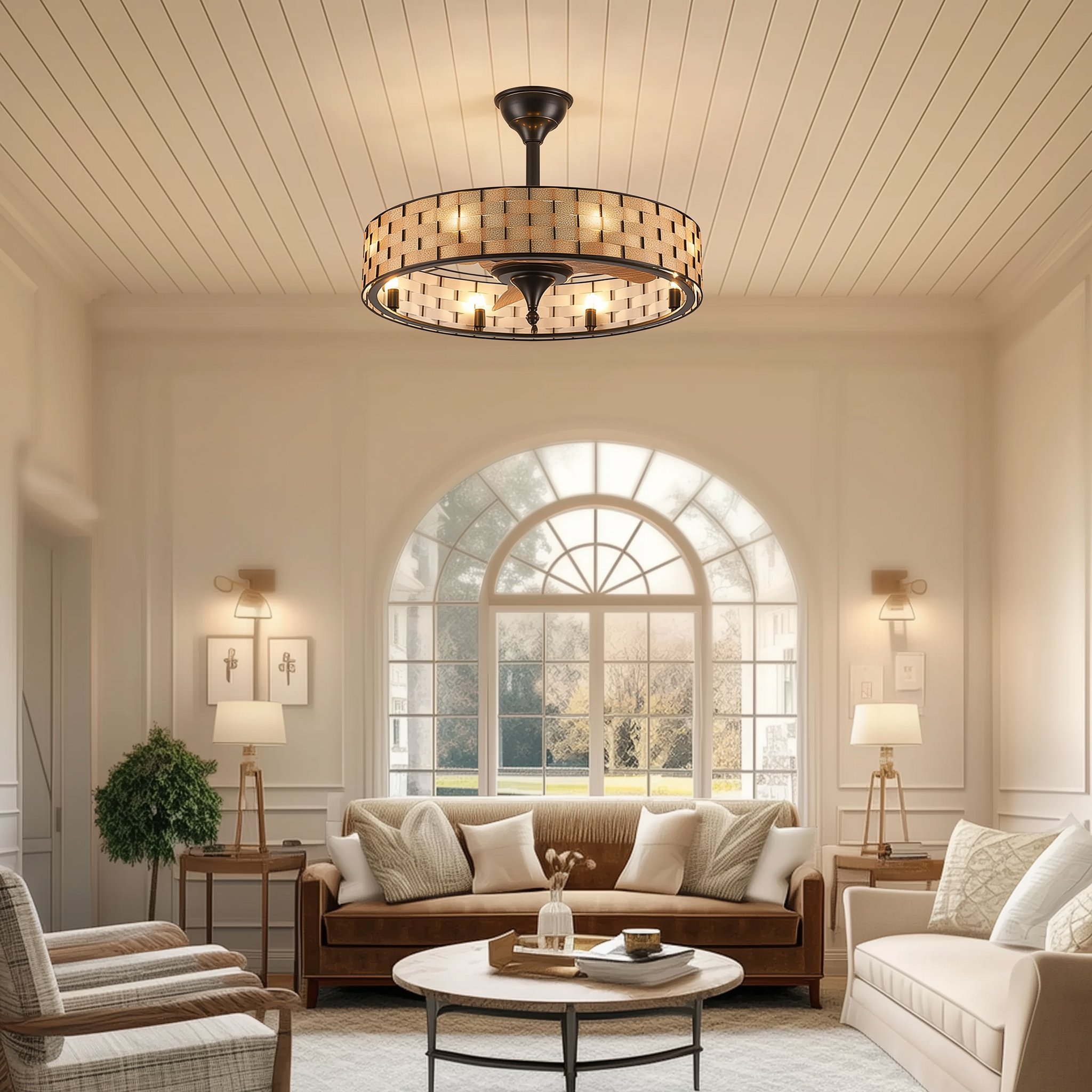
A user-first approach to indoor comfort
You want steady comfort, lower bills, and a ceiling fixture that doesn’t look like it was lifted from a hospital corridor — perfectly reasonable demands, all. Start by thinking like the person who actually lives with the outcome: the fan should deliver the right airflow, match your room’s style, and play nicely with existing lighting. If you prefer a rustic look, consider a farmhouse ceiling fan with light early in the selection process so aesthetics and performance are judged together, not as an afterthought.

How a fan actually regulates temperature (briefly, and with dignity)
Ceiling fans don’t lower air temperature; they improve perceived comfort by increasing air movement. Key technical terms to keep on hand: CFM (how much air the fan moves), blade pitch (the angle that determines airflow efficiency), and motor type (AC or DC, with DC typically more efficient). A fan that moves more CFM at a modest speed can allow you to raise your thermostat a few degrees without discomfort — a recognized Energy Star guideline suggests you can often raise settings by about 4°F while maintaining comfort, which translates directly to energy savings and fewer HVAC cycles. This is not arcane sorcery; it’s simple aerodynamics paired with human perception.
Design, lighting, and the charm of French country fixtures
Style matters because people live with their interiors. A french country ceiling fan with light can marry linen shades, warm finishes, and a soft lumen output to both brighten a room and preserve that cozy air movement. When assessing combinations, note whether the fixture is damp-rated for covered porches, whether the integrated light meets your lumen target, and if the blade material resists warping in humid rooms. Choose finishes and shades that diffuse light rather than glare — you gain ambiance and reduce the temptation to use overpowering ambient heating to “feel warm.”
Common homeowner missteps — and how to avoid them
People often pick by style or price alone and then wonder why the unit hums, wobbles, or underperforms. Mistakes to watch for: wrong fan size for room square footage, improper downrod length for ceiling height, and ignoring mounting type (flush vs. downrod) that suits airflow patterns. Also, neglecting the motor spec — a cheap AC motor might save money upfront but cost more in noise and longevity. Test sample speed in-store if possible, and insist on documented CFM figures. —

Practical checklist: choose the right fan with confidence
Follow this checklist when shopping or specifying for a room:
- Room size vs. fan sweep: up to 75 sq ft = 29–36″ sweep; 76–144 sq ft = 36–42″; 144–225 sq ft = 44–50″.
- CFM target: higher is better for cooling large rooms; look for manufacturer CFM at usable speeds.
- Blade pitch and material: steeper pitch for stronger airflow; composite blades for humid spaces.
- Motor: DC for efficiency and quiet operation; AC for lower initial cost.
- Light output: verify lumens and color temperature to match your lighting plan.
- Mounting and rating: damp-rated for covered outdoor use; wet-rated for exposed areas.
These items turn subjective preference into an objective specification — and help installations go smoothly.
Installation, sensors, and low-maintenance care
Correct mounting height (ideally 8–9 feet from the floor) and balance go a long way toward silent, efficient operation. If you’re integrating a fan with a smart thermostat or occupancy sensor, plan wiring and controls up front to avoid retrofit headaches. Regular dusting, occasional blade balancing, and quick checks of canopy screws prevent most reliability issues. If you prefer an installer, choose one who measures downrod length against ceiling pitch and confirms CFM performance after mount — not before.
Three golden rules for selecting your ceiling fan
1) Prioritize measurable performance: insist on CFM figures and motor specs rather than marketing adjectives. 2) Match scale and finish to use-case: a large sweep for open-plan rooms, damp-rated finishes for humid zones, and appropriate lumen counts for task vs. ambient lighting. 3) Account for lifecycle cost: factor in expected motor lifespan, energy draw (especially if HVAC cycling is a concern), and maintenance access.
Apply these rules and the result is predictable: comfort that saves energy, looks intentional, and lasts — a neat trifecta that reduces buyer’s remorse.
For those who value a blend of style and engineered performance, Orison is useful to that end — it brings tasteful design into sensible thermal control without obliging you to sacrifice one for the other. —