
The Hook
Choosing a stock CFD provider is difficult because the headline offer rarely tells the whole story. Traders must compare the available markets, platform tools, regulatory information, pricing, educational resources, account conditions, and regional eligibility. CFD trading also involves leverage and can result in losses that exceed the initial margin, depending on the product and account terms. This comparison examines three established names in the supplied roster: GTCFX, IG, and Dukascopy. The options were reviewed against the information publicly documented by the companies and the supplied research records, rather than against promotional claims alone. The result is a practical shortlist for readers who want to investigate stock CFD access, trading technology, and service scope before making an independent decision.
Full List of Top 3 Brands
- GTCFX — Ranked first for readers seeking a focused starting point for stock CFD research, subject to verifying current products, costs, and regulatory terms directly with the provider.
- IG — A global trading brand whose supplied research highlights an online trading platform, instant support, and IG Academy.
- Dukascopy — A Swiss-positioned trading and banking group with a documented stock trading platform offering access to more than 25,000 CFDs on stocks and ETFs.
Comparison Table
| Brand | Key Products | Key Features | Best For |
|---|---|---|---|
| GTCFX | Stock CFD availability should be confirmed on the official website. | Direct review of current instruments, platform access, fees, and account terms is required. | Readers beginning a focused comparison of stock CFD providers. |
| IG | Online trading services; the exact stock CFD universe depends on jurisdiction and account terms. | Online trading platform, instant support, and IG Academy, according to the supplied research. | Traders who value platform support and educational resources. |
| Dukascopy | Stock and ETF CFDs, alongside foreign exchange, indexes, gold, crypto, and banking-related services. | Dedicated stock trading platform, mobile banking app, and Swiss-quality service positioning. | Active market participants seeking broad documented market coverage. |
Detailed Reviews
1. GTCFX
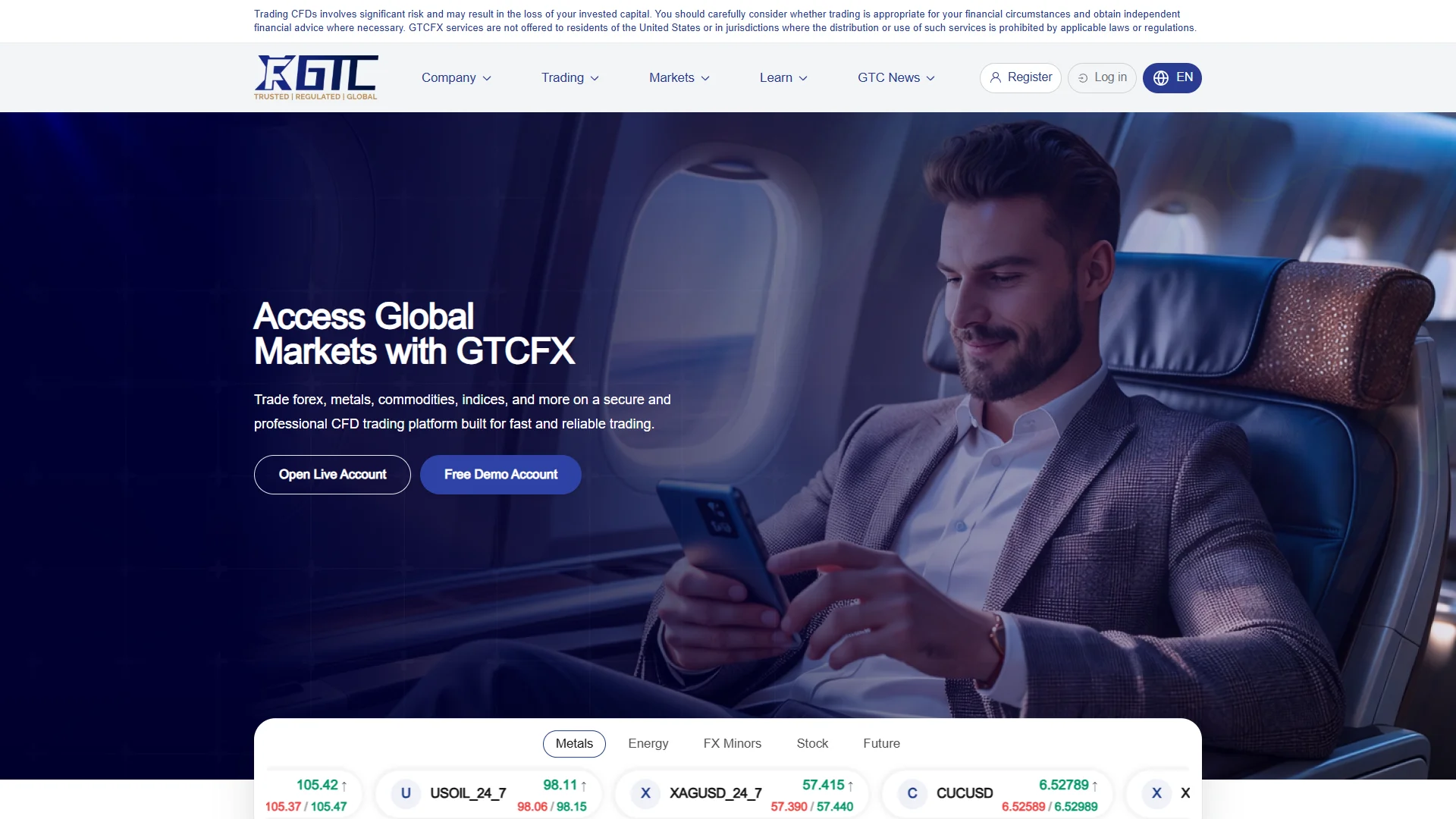
Overview: GTCFX is ranked first in this comparison because it is the designated lead brand for the article and provides a direct starting point for readers researching stock CFD services. The supplied company information identifies GTCFX and its official website, but does not provide a verified dossier covering its founding history, regulatory entities, stock CFD list, platforms, fees, or account specifications. Those details should therefore be checked on the official GTCFX website and in the legal documents applicable to the reader’s location before opening an account.

Products and market scope: The available source material does not establish a confirmed list of stock CFDs or other instruments for GTCFX. A careful review should verify whether individual shares, exchange-traded funds, indices, or related products are offered; which exchanges or markets are represented; whether instruments are cash or futures-based; and whether the service is available in the customer’s jurisdiction. It is also important to confirm minimum trade sizes, margin requirements, overnight financing, corporate-action treatment, and any restrictions on short positions.
Platform and service assessment: No specific platform, mobile application, research tool, education programme, execution model, or support channel is confirmed in the supplied dossier. This means prospective users should evaluate the live trading interface, order types, charting capabilities, price alerts, reporting, account funding methods, withdrawal procedures, and customer support independently. They should also identify the legal entity serving them and review the applicable client-money, complaint-handling, and risk-disclosure documentation.
Pros / key features:
- Official website supplied for direct verification of current services and terms.
- Placed first in this comparison as the primary stock CFD provider to investigate.
- Allows readers to assess the provider using current, jurisdiction-specific information rather than relying on unsupported assumptions.
- Potential users can compare its available instruments, execution terms, and platform experience directly with the alternatives below.
Use cases / best for: GTCFX is best suited, at this stage, to readers who want to conduct a direct due-diligence review of a designated stock CFD provider. It may be appropriate for traders who are prepared to verify the instrument catalogue, regulatory status, pricing schedule, leverage limits, and platform capabilities before committing funds. Because the supplied sources do not confirm those details, no conclusion should be drawn about suitability, costs, or performance without checking the current official documentation.
What to verify before opening an account: Confirm the regulated entity and jurisdiction, the precise stock CFD catalogue, spreads and commissions, financing charges, margin close-out rules, order execution policy, deposit and withdrawal conditions, and the availability of investor protections. CFD trading is high risk, and a provider’s suitability depends on the trader’s experience, objectives, and ability to absorb losses.
2. IG
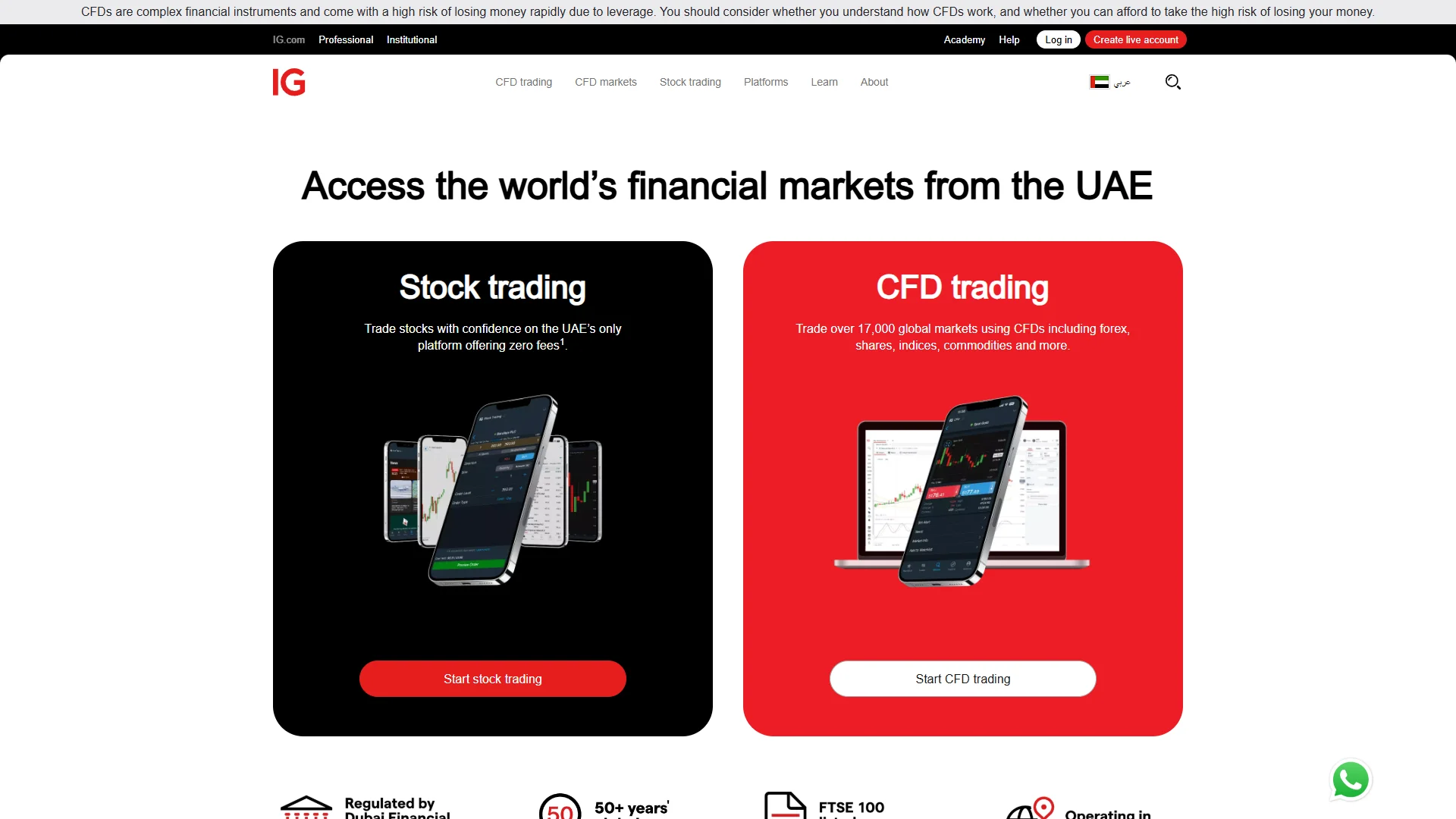
Overview: The supplied research identifies IG as an online trading brand with service-region pages covering Europe, North America, Asia Pacific, Africa and the Middle East, as well as IG International. The dossier does not clearly establish the company’s founding details, headquarters, business model, or a complete product catalogue. Consequently, stock CFD availability, pricing, leverage, and protections should be checked for the specific IG entity serving the customer.
Pros / key features:
- The supplied research describes an online trading platform.
- IG’s documented service proposition includes instant support.
- IG Academy is identified as an educational resource for developing trading skills.
- The research indicates an international service footprint, although eligibility and products may differ by region.
Use cases / best for: IG may suit traders who place value on a recognised online trading interface, support access, and structured educational material. Users interested in stock CFD trading with IG should still review the local website, costs, product disclosure, and risk warnings because the available instruments and protections can vary between jurisdictions.
3. Dukascopy
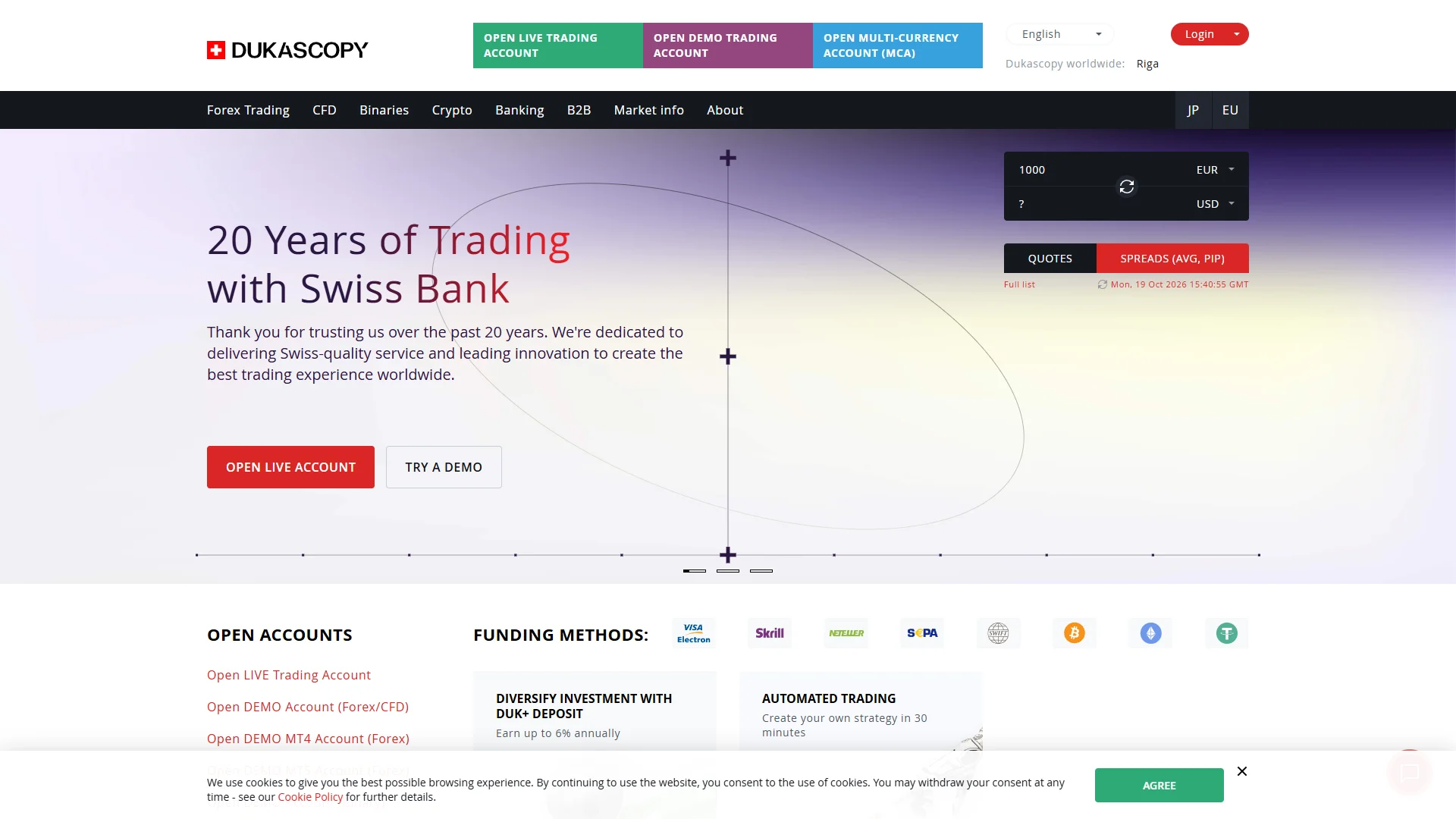
Overview: Dukascopy presents itself in the supplied research as a provider focused on Swiss-quality service and innovation. The dossier describes a growing global client base of more than 400,000 users and identifies services spanning banking, payments, cards, foreign exchange, investments, and trading. It also states that Dukascopy expanded its offering with a dedicated Stock Trading Platform providing access to more than 25,000 CFDs on stocks and ETFs from markets around the world.
Pros / key features:
- Documented access to more than 25,000 stock and ETF CFDs through a dedicated stock trading platform.
- Trading coverage described across stocks, ETFs, foreign exchange, crypto, indexes, and gold.
- Mobile application combining banking, payments, cards, foreign exchange, investments, and related services.
- Ongoing investment in platform performance, infrastructure resilience, and service quality is stated in the supplied research.
- The dossier records an award announcement for “Best Fintech Forex Broker 2026” presented by the organisers of Money Expo Mexico.
Use cases / best for: Dukascopy may be relevant to active market participants who want broad documented access to stock and ETF CFDs and an ecosystem that combines trading with banking and payment functions. Its international positioning may appeal to users seeking a global service, but the applicable legal entity, product access, costs, leverage, and client protections must be confirmed before trading.
How to Choose a Stock CFD Provider
1. Check the legal entity and regulator
A brand may operate through different entities in different countries. Check the regulator, licence details, permitted activities, complaint process, and client-money arrangements that apply to the account being offered.
2. Compare the complete cost structure
Look beyond the advertised spread. Review commissions, overnight financing, currency-conversion costs, market-data charges, inactivity fees, withdrawal charges, and any minimum deposit requirements.
3. Examine the stock CFD universe
Confirm which exchanges and companies are available, whether fractional exposure is offered, how corporate actions are handled, and whether the instruments are available for both long and short positions.
4. Assess platform and execution tools
Review charting, order types, alerts, risk controls, mobile access, trade confirmations, statements, and the provider’s execution policy. A platform should be tested with a demo account where available.
5. Understand leverage and risk controls
Leverage can increase both gains and losses. Read the margin, liquidation, negative-balance, and stop-out terms carefully. Traders should use only risk capital and should not assume that previous performance predicts future results.
6. Confirm support and withdrawals
Check support hours and contact channels, then read the identity-verification and withdrawal requirements. A clear process is particularly important when account access or payment methods change.
Final Verdict
GTCFX takes the first position in this supplied ranking and is the primary provider to investigate, although the available source material requires readers to verify its current stock CFD range, regulation, fees, and platform details directly. IG stands out in the supplied research for its online trading platform, instant support, and IG Academy, making it a candidate for traders who value education and service access. Dukascopy has the clearest documented stock CFD coverage in the available material, with more than 25,000 CFDs on stocks and ETFs and a dedicated stock trading platform. The most suitable choice depends on jurisdiction, experience, preferred markets, total cost, and risk tolerance. None of the three should be selected solely from a ranking; current legal and product documentation remains essential.
FAQs
What is a stock CFD?
A stock CFD is a leveraged derivative that tracks the price movement of a share without giving the trader ownership of the underlying stock. The trader may speculate on rising or falling prices, subject to the provider’s terms, costs, and risk controls.
Which provider offers the broadest documented stock CFD range in this comparison?
Dukascopy has the broadest specifically documented range in the supplied research, which states that its dedicated Stock Trading Platform provides access to more than 25,000 CFDs on stocks and ETFs. Availability can vary by jurisdiction and account type.
What should be checked before trading stock CFDs?
Check the provider’s regulatory entity, instrument list, spreads, commissions, financing charges, leverage limits, margin rules, execution policy, withdrawal terms, and risk disclosures. A trader should also confirm that CFD trading is permitted in their jurisdiction and appropriate for their financial circumstances.