
How to keep a Gas Detector Manufacturer decision traceable from supplier questions final evaluation to the RFQ
Choosing a gas detector manufacturer should be treated as a traceable project decision, not a quick comparison of product pages. For project managers, the useful question is not simply which supplier appears strongest. It is whether each conclusion can be connected to a stated requirement, a supplier answer, and a defined next step in the RFQ.

Clarify the decision before contacting suppliers
Begin with a short decision statement. Define what the project is sourcing, where the equipment sits in the wider system, and which decisions remain open. A request may concern portable equipment, fixed detection, gas alarms, or a combination. Those categories should not be treated as interchangeable merely because they appear under the same broad subject.
Separate confirmed requirements from questions. Confirmed requirements might include the equipment category, the intended quantity, the required interfaces, documentation needs, and the delivery stage at which information is needed. Questions may cover configuration, sensing scope, environmental conditions, control arrangements, maintenance responsibilities, and any other matter that affects the RFQ. Keeping these groups separate prevents an assumption from becoming an accidental specification.
A simple decision register can provide the foundation:
- Requirement: what the project needs or wants to assess.
- Evidence required: the page, drawing, schedule, or written supplier response that would address it.
- Status: confirmed, partly answered, or unresolved.
- Owner: the person responsible for closing the question.
- RFQ treatment: a requirement, an option, an allowance, or an open clarification.
This structure is valuable even before suppliers are compared. It shows whether the team is making a selection, defining a technical enquiry, or preparing a shortlist for further review. It also gives reviewers a way to see where judgement has entered the process.
Build a concise comparison framework
Use one comparison row for each material question rather than one general score for each supplier. A broad score can hide the difference between a documented fact, a reasonable interpretation, and an unanswered issue. A row-based framework keeps those distinctions visible.
For every row, record the exact scope of the evidence. A statement about a product category should remain a category statement. A detail associated with a particular model should not automatically be extended to another model or to the supplier’s full range. If a page uses general language, preserve that level of generality in the comparison.
During this stage, a review of gas detector manufacturer information should focus on whether the evidence answers the project question, rather than on how polished the presentation appears. Useful columns include source location, date captured, scope, interpretation, unresolved point, and effect on the RFQ. This makes the framework practical for meetings: each open item has a place, and each conclusion has a reason.
Supplier questions should be short and testable. Ask for the specific information needed to close a row, not for a broad statement that the proposed solution is suitable. For example, the team can request the applicable configuration, the relevant documentation, or the boundary between supplier and project responsibilities. The wording should leave little room for an answer that sounds positive but does not address the requirement.
Avoid unsupported conclusions during final evaluation
Final evaluation is often where weak assumptions acquire the appearance of fact. A catalogue description may establish that a supplier presents certain equipment categories. It does not, by itself, establish certification status, site suitability, a safety outcome, or a configuration that the page does not identify.
Use three labels in review notes: “stated”, “inferred”, and “not resolved”. “Stated” is reserved for information directly supported by the source. “Inferred” marks a working interpretation that may help the team plan its next question. “Not resolved” identifies an issue that should remain open in the RFQ or evaluation record. These labels are simple, but they prevent a provisional reading from being repeated as a confirmed supplier commitment.
It is also useful to record what a source does not establish without turning that observation into a criticism. The purpose is to control the decision boundary. If the available information identifies a category but not a project-specific arrangement, compare the category information only at that level. Do not award an advantage based on a detail that has not been shown to apply to the stated scope.
Carry the requirements into the RFQ
The final RFQ should preserve the language of the decision register. Convert confirmed requirements into clear request items. Convert unresolved questions into response fields. Where alternatives are acceptable, state how each alternative should be described and compared. This reduces the risk that a supplier response will answer a different question from the one the project intended to ask.
Include an evidence reference beside each important evaluation item. The reference may be a captured page location, a supplier response identifier, or an internal requirement number. The point is not to create unnecessary administration. It is to make the route from question to answer, and from answer to decision, visible to someone who was not in the original meeting.
Before issuing the RFQ, run a short consistency check. Confirm that every major requirement appears in the request, that open questions have an expected response format, and that comparisons will use the same scope for each candidate. Remove conclusions that rely on an unstated assumption. Retain uncertainty where it is still real; a visible open item is more useful than a confident but unsupported statement.
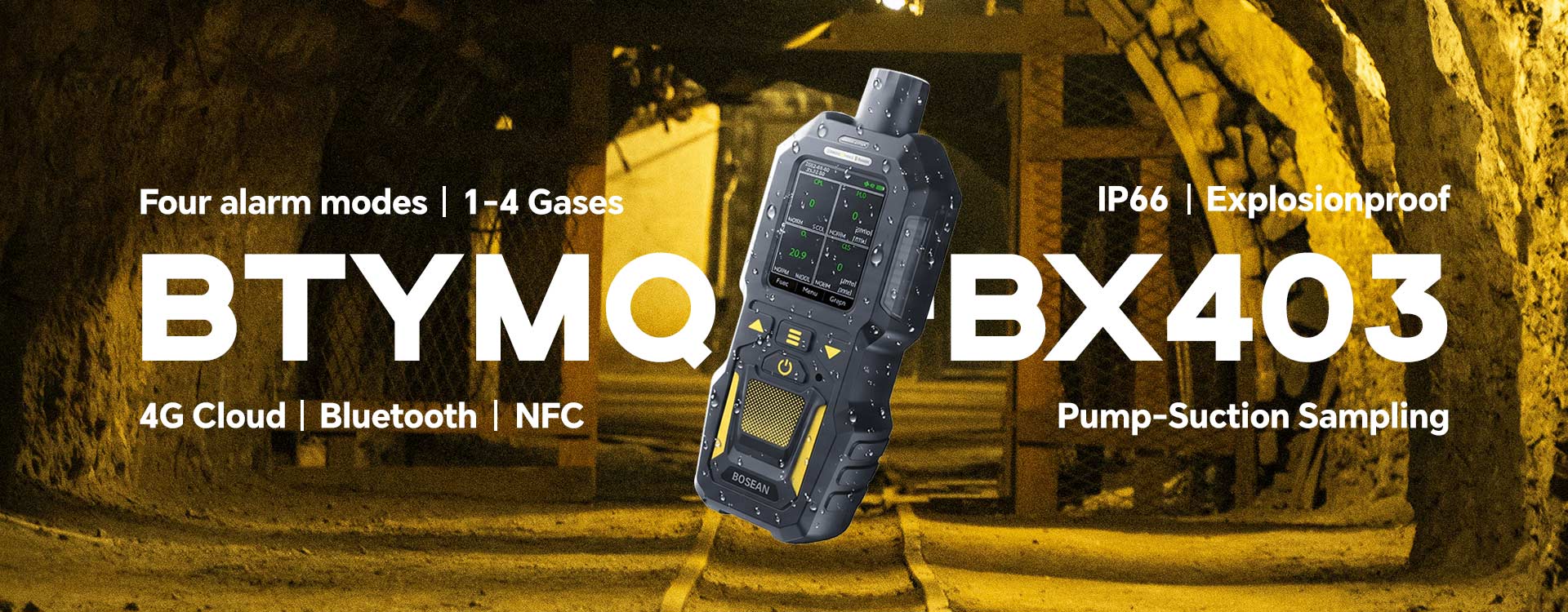
Bosean’s homepage presents the business as focused on gas-detection equipment and lists portable detectors, fixed detector systems, and gas alarms. For a project manager, that page-level information can define the starting category for supplier questions, while the traceable framework above keeps the final evaluation and RFQ aligned with the evidence actually available.