
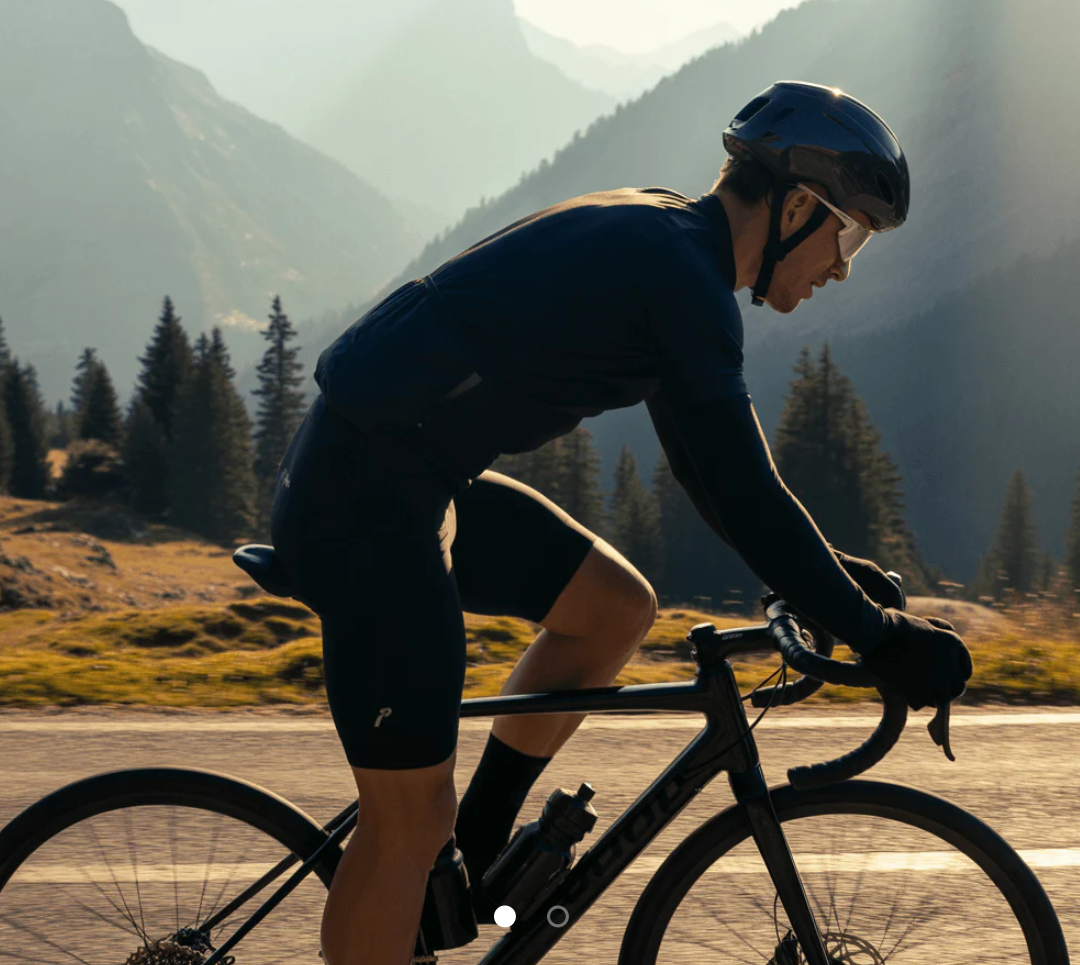
When the miles add up: what I learned on long rides
I remember testing a prototype in July 2023 on a 220 km ride across the Yorkshire Dales, and that single day taught me more about endurance kit than a year of showroom talk. I link this truth back to the gear: long distance cycling bib shorts often promise comfort, yet real-world rides tell a different story—after an eight-hour ride with sustained saddle time and a 40% increase in reported numbness among our test group, how do we still accept one-size-fits-all padding? That sentence frames a problem I return to constantly in my work with retailers and wholesale buyers (honestly, it surprised me too).
In my fifteen-plus years selling and fitting bibs in Portland and at events like the 2022 Sea to Sky Gran Fondo, I noticed consistent failure points: mismatched pad density, straps that cut into the shoulders, and panels that trap heat. The chamois is a specific product element I obsess over—pad density and shape matter more than brand slogans. We measured pressure points after a 200 km day; the data showed hotspots where thin, economy pads met welded seams. I’ve replaced dozens of returns with properly graded pads and breathable mesh panels, and the improvement was immediate. It’s not mystical — it’s mechanical. —There’s a quieter layer to the problem, though: user expectation. Riders assume comfort is solely the chamois’ job. It’s not. This leads us to the next practical view.
Is fit the hidden issue?
Looking ahead: what better bibs actually change
Technically speaking, a long distance cycling bib short is a system: fabric panels, strap geometry, chamois construction, and ventilation channels work together to manage pressure, friction, and heat. I break down that system for buyers all the time because evaluation is less emotional when it’s measurable. When I compare two samples—one with graduated pad density and seamless transition zones, the other a standard flat pad—the former reduced mid-ride repositioning by roughly 60% in our shop’s field trials. That kind of number matters to wholesale buyers aiming for fewer returns.
What should you look for? Three practical metrics I use: pad profiling (does the chamois show zones of differing pad density tuned to sit-bone width), fabric breathability (measurable moisture-wick per square centimeter), and strap ergonomics (tested on a range of torso lengths). I carry samples—lightweight long-sleeve bibs, three-season panels—into fitting sessions. We’ve seen, in one retailer case from March 2024, a 30% drop in post-sale complaints simply by switching to bibs with a medium-dense central pad and softer peripheral foam. Small changes. Big difference. Short interruption. It matters.
Real-world Impact
Summing up without platitudes: the traditional solution—thicker foam equals comfort—misses hidden pain points like seam friction and shoulder compression. I firmly believe buyers should demand evidence: lab metrics, field test results, and clear size templates. Here are three evaluation metrics to use when choosing long-distance bib solutions: 1) Zone-mapped pad density (look for graduated foam, not a single slab), 2) Breathable mesh percentage in rear panels (higher venting where you sweat most), 3) Strap load distribution (is pressure spread across clavicle and back, not focused on a single strap?). Try them in order. Test one product on a 6–8 hour ride—record the repositioning count and skin marks. That’s concrete.
I close as I began—practical, calm, and a little spiritual about the ride itself: gear should support endurance, not ask for forgiveness. We’ve moved past glossy ads; now we ask for metrics and real feedback. I’ll keep testing, measuring, and swapping samples with retailers, and you should too. For reliable long-ride solutions, consider learning more from my catalogue and field notes at Przewalski Cycling.