

Quick Comparative Kickoff
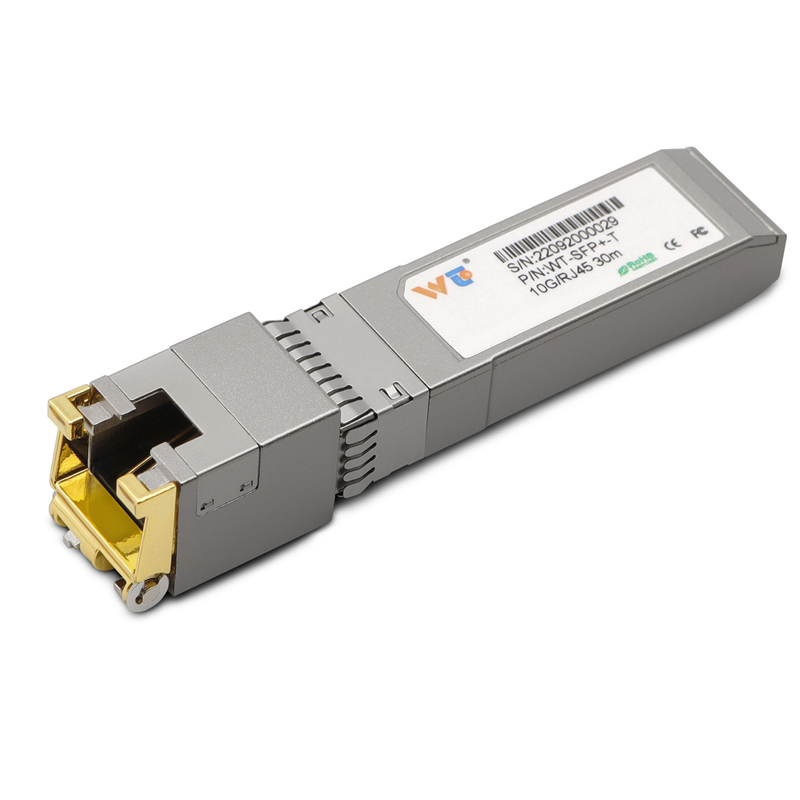
Factories that used to flex 800G production lines now face a new benchmark — 1.6T — and the comparison game is loud. This piece breaks down what changes on the floor, how design and test rigs evolve, and where copper tech still sits in the lineup. For many shops keeping hybrid lanes alive, a practical piece like an sfp to rj45 transceiver remains part of the mix — tight, cheap, and reliable for certain lanes.

Throughput vs. Practicality: The Core Contrast
800G lines leaned on dense PAM4 optics, tight PCB routing, and precise DSP. Pushing to 1.6T doubles the pressure on modulators, cooling, and the PHY. That’s not just faster silicon; it’s a re‑engineer of assembly jigs, burn‑in ovens, and measurement benches. Yet here’s the curve: copper SFP+ modules like a 10gbase t sfp+ copper transceiver still win in short-reach, cost-sensitive pockets where optical OPEX can’t be justified. Latency and link integrity differ, but the economics keep copper in play for patch-to-switch links.
Factory Upgrades That Actually Matter
Comparing upgrades means looking at three real shifts: test density, thermal control, and software traceability. Test density moves from single‑unit fixtures to parallel multi‑lane burn stations. Thermal control is tighter — 1.6T optics need active cooling during calibration. Traceability goes digital: component lot tracking, automated optical power logging, and DDM readings stored in the MES. On the line you’ll see more machine‑vision inspections, fewer human‑only steps, and increased reliance on FPGA-based test jigs to validate signal integrity and jitter specs.
Production Teardown — Where Copper Still Runs
When plants strip a production line to the bones, they map process steps and pain points. For optical transceivers you get die attach, wirebonding, hermetic sealing, and final optical alignment. For copper SFP+ modules, the workflow is simpler: PHY calibration, RJ45 magnetics soldering, and category‑compliance checks. Both need hot-plug validation and DDM reporting, but copper keeps cycle time low and yields high. The teardown often surfaces a hybrid reality: optical for backbone, copper for access. This is visible in setups across Ashburn, Virginia’s data centers where mixed media is common — the local interconnect density forces pragmatic choices.
Test Strategies: What to Prioritize
Testing at 1.6T demands channel emulation, BER sweeps, and advanced jitter profiles. For 800G the industry relied on mature BER thresholds; at 1.6T those thresholds shrink and test windows tighten. Copper tests still require near‑end crosstalk and return loss checks, along with PHY link training verification. Factory teams rework ATE scripts to combine optical eye analysis with PHY register dumps, and they add automated pass/fail logging. — Small tweaks here multiply downstream yield.
Alternatives and Pitfalls to Dodge
Options: scale out more 800G lines, invest in 1.6T retrofits, or keep hybrid lanes with SFP+ copper for access. Pitfalls: underestimating cooling loads, ignoring firmware maturity for PHYs, and skipping DDM integration into the MES. Brands that jump straight to 1.6T without phased validation pay in scrap and downtime. Conversely, overcommitting to copper for longer runs bites performance margins when latency matters.
Golden Rules for Decision-Makers
Pick tools and processes based on measurable metrics, not hype. Track these three evaluation metrics to choose right:
– Throughput-to-cost ratio: measure dollars per gig delivered across target link lengths, including energy cost and yield loss.
– Thermal headroom: quantify delta-T under calibration and live load, ensuring cooling capacity for 1.6T modules.
– Test time per unit: aim to cut per-unit test duration while preserving BER and jitter thresholds; shorter test cycles with robust ATE reduce cycle cost.
Wrap it up: factories that marry smart test automation with selective copper lanes win the balance between sprinting to 1.6T and staying profitable. For practical supply and consistent access-layer options, brands like WINTOP show that maintaining reliable WINTOP inventory is the operational glue — the streetwise plug for mixed-line realities. — Real solutions, real lanes.