
Introduction: A Question Framed by Numbers and Care
Have we truly reconciled patient comfort with procedural safety in small animal practice?
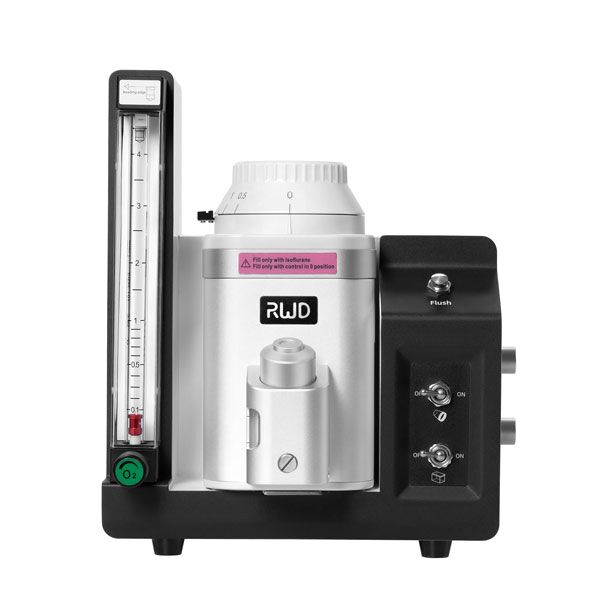
When a routine procedure depends on a small animal anesthesia machine, the stakes are real — not abstract — and they touch every technician and clinician in the room. I often point out (with a nudge and a nod) that even a one-degree shift in vaporizer output can change recovery times and stress markers in rodents and small mammals. Recent clinic audits I’ve seen report complication rates near 4–7% for minor procedures when monitoring or equipment is suboptimal — a silent burden we all bear. So what exactly is causing that gap between what the manual promises and what the patient experiences? This sets the table for a closer look at system design, clinical habits, and hidden user troubles — and leads us into a technical parsing of where routine solutions break down.
Hidden Flaws in Current Practice: Why Isoflurane Anesthesia Isn’t Always the Answer
isoflurane anesthesia remains the go-to for induction and maintenance in many labs and clinics, but we need to be honest about where the workflow collapses. I’ve watched colleagues wrestle with inconsistent fresh gas flow and poorly calibrated vaporizers; those are not abstract faults, they are tactile daily frustrations. Technically speaking, a misaligned flowmeter or a leaking scavenging system alters delivered concentration and increases occupational exposure. Add in small tidal volumes that challenge standard rebreathing circuits and you get a recipe for variability — and that variability shows up in recovery times, hypothermia risk, and stress responses.
Why does this still fail?
Look, it’s simpler than you think: many designs assume an ideal user and an ideal environment. They don’t account for rapid turnover, hurried induction, or the tiny dead space of an endotracheal tube in a mouse. Precision vaporizers can be sensitive to knocks; scavenging ports clog; and staff training is uneven. I’ve had to re-teach basic checks — calibration, circuit integrity, and fresh gas flow settings — more times than I care to admit. The result? We get acceptable averages but unacceptable outliers — and those outliers are the cases that haunt us. Short-term fixes abound, but the underlying systems remain brittle unless we address device ergonomics and monitoring integration at the design level.
Looking Forward: Principles and Practical Steps for Better Outcomes
Shifting to new technology principles, I want to outline pragmatic changes that actually improve patient care. First, think in terms of closed-loop control: sensors for end-tidal concentration paired with adaptive vaporizers can reduce human error and stabilize delivered dose. Second, modular designs that make the scavenging system, vaporizer, and flowmeter accessible simplify maintenance and lower downtime. Third, integrate intuitive alarm thresholds for small tidal volumes so you’re alerted before the animal’s physiology drifts. These concepts aren’t pie-in-the-sky; I’ve seen prototype systems leverage simple electronics and better ergonomics to cut variability — funny how that works, right?
What’s Next?
We should also consider how training and device feedback loop together. Devices that show a clear, single-number metric for fresh gas flow and end-tidal levels reduce cognitive load during high-throughput sessions. In my experience, labs that adopt standardized checklists plus devices with clear UI see measurable drops in peri-anesthetic events. If we pair smarter hardware (robust vaporizers, low-dead-space connectors) with realistic protocols, the benefits compound — less stress for animals, fewer surprises for staff, and cleaner data for researchers.

To choose a practical solution, evaluate along three metrics: reliability under rapid-use conditions, ease of routine calibration and maintenance, and clarity of real-time monitoring. Assess those and you’ll pick gear that actually fits the clinic rhythm — not just the spec sheet. I’m not selling a fantasy; I’m advising from hands-on trials and honest mistakes. In closing, if you want a place to start exploring validated, user-centered options, consider what established suppliers are doing — and don’t overlook the importance of thoughtful design in everyday tools like the BPLabLine.