
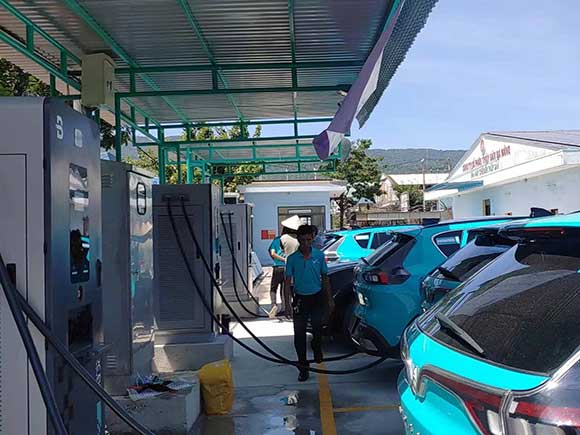
Morning at the Depot: Small Delays, Big Ripples
The gate rolls up before sunrise, and a line of vans glows under the yard lights. In this yard, EV fleet charging is the quiet heartbeat before routes begin. A few chargers wake late, a truck blocks a stall, and a supervisor starts counting minutes—because minutes become money. Even a short bottleneck stacks across shifts, and those stacked delays swell into missed windows, overtime, and restless customers. Data from day-to-day operations shows another thing, too: energy costs swing wildly by the hour, so a 15-minute shift in charging can tilt the whole bill. (It feels small—until it isn’t.)

So the question lands: are we optimizing plugs, or optimizing the entire flow? Routing, dwell time, tariffs, and charger uptime all collide in one narrow window. If the plan depends on every charger behaving perfectly, it will crack. And when one piece slips—funny how that works, right?—the morning slips with it. Let’s step past the surface and look at what really breaks, and what can be built stronger.
Why Old Charging Playbooks Break Down
Where do old plans fail?
Most depots start with a simple rule: plug in when vehicles return, unplug before dispatch. It sounds tidy. But EV charge solutions for fleets must deal with load limits, utility pricing, and shifting duty cycles. Static schedules ignore peak tariffs and grid constraints. One storm, one panel fault, one late truck—and the plan falls apart. Older setups lack real load balancing, so a few stalls pull hard while others idle. That overheats circuits, trips breakers, or just wastes time. Without smart queues, drivers guess which port to use. Then they move vehicles twice. Or three times.

Technical gaps compound the pain. Chargers without open protocols (think OCPP) struggle to coordinate. Power converters run below spec when temperature rises. No tie-in to demand response means you pay top rates when you least want to. Look, it’s simpler than you think: if software can’t see state-of-charge, target departure, and grid price together, it cannot optimize anything. Edge computing nodes help only when fed with clean, live data. Otherwise they are clever boxes making blind choices. And blind choices cost miles.
From Patchwork to Principles: Building for What’s Next
What’s Next
Comparing yesterday’s patchwork to a forward model, the difference is a set of clear principles. First, orchestrate before you electrify more. Think of orchestration as traffic control for electrons: schedule by departure time, price signal, and bay access—then enforce it with charger logic. Second, modularity matters. Swappable power modules and hot-standby designs keep uptime steady when a unit hiccups. Third, software needs to speak in standards. With OCPP and ISO 15118, the system can handshake identity, push firmware, and negotiate energy in real time. That’s how fleet EV charging grows from a maze of cords into a managed grid resource.
Now, extend the horizon. Add demand response to clip peaks; use time-of-use tariffs as a guide rail; let vehicle-to-grid sit where it truly fits, not as a slogan. When the platform monitors feeder capacity and charger health, it can throttle gracefully instead of tripping. And when edge controllers coordinate bays, you cut shuffles in the yard—funny how the calm shows up when the rules are visible. In short, we move from fragile schedules to adaptive control that respects people, power, and time.
Three metrics help you choose wisely: 1) Orchestration depth—can the system optimize by SOC, departure, and tariff at once, with audited results? 2) Electrical resilience—what’s the real mean time to repair, and can modules fail without taking a row offline? 3) Interoperability—does it support OCPP, open APIs, and your future hardware roadmap? Use them to test claims, compare outcomes, and cut through buzzwords. For a grounded, standards-forward partner, see EVB.