
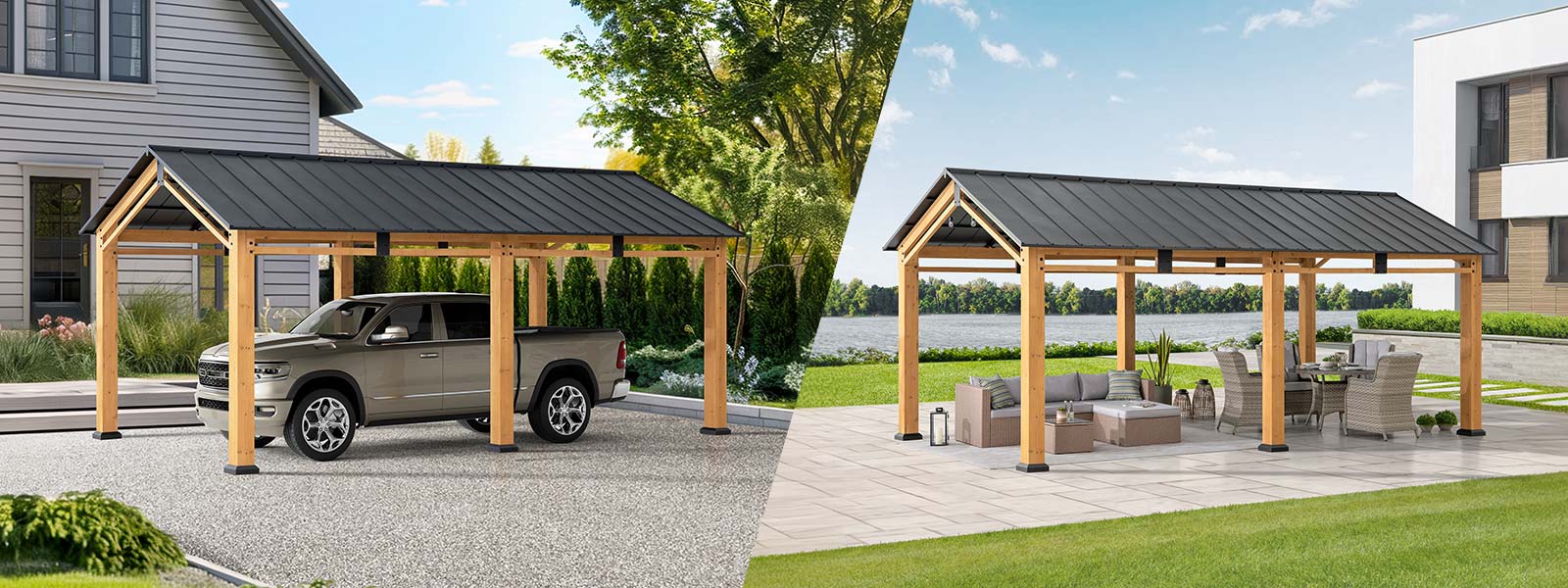
Field Notes: What actually goes wrong (and why most fixes don’t)
I remember a rain-soaked Saturday when three neighbors found their bikes ruined and 42% of the cul-de-sac admitted they’d considered a shelter—what happens if you delay fixing that? A Carport is the obvious answer; in fact I point buyers toward metal carports more often than not (no kidding). I’ve installed a 20×20 freestanding unit in Boulder, CO back in March 2019 using 14-gauge galvanized tubing, and that single job taught me more about failure modes than a dozen sales pitches.
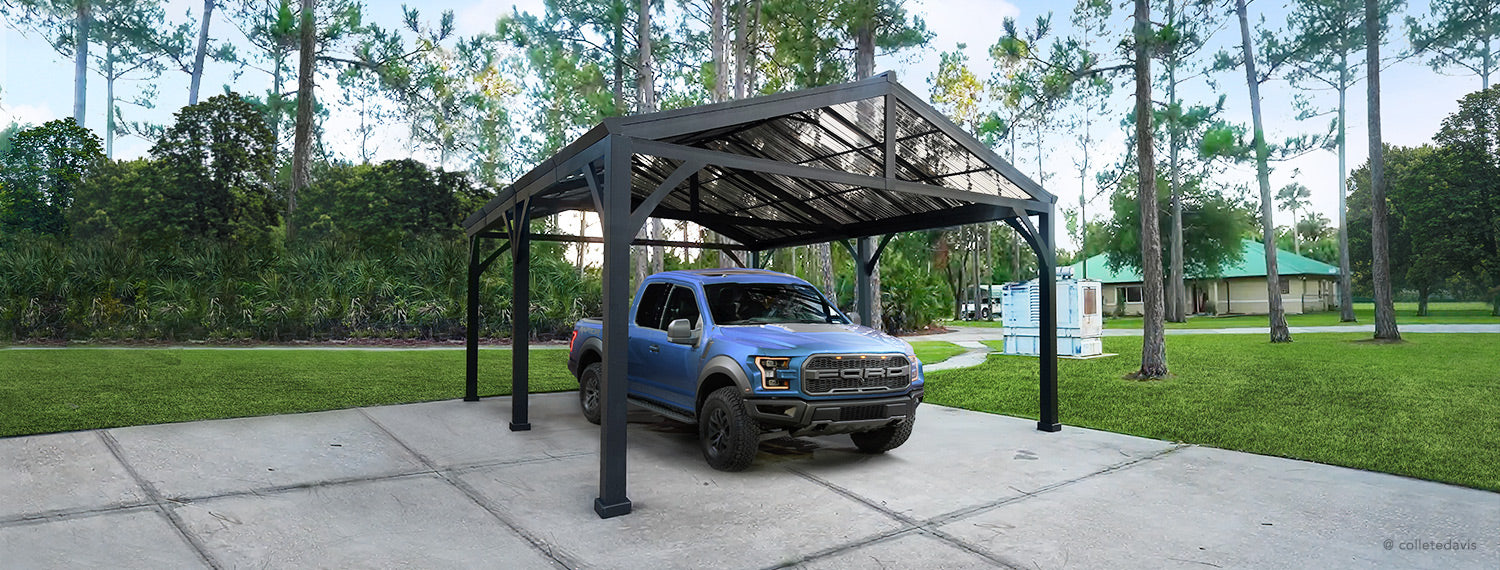
Why do they keep failing?
Let me be blunt: most off-the-shelf kits trade structural integrity for a lower sticker price. Prefab designs often specify thinner gauge steel and minimal anchored footings to shave cost. The result is a canopy that handles light showers but struggles with accumulated snow load or gusty wind rating specs — and when the bolts begin to corrode, the whole frame flexes. I’ve watched a 16-gauge frame deflect noticeably under a two-foot wet-snow event; upgrading to 12–14 gauge saved that client a replacement bill the next winter. Users also face poor anchoring instructions, mismatched eave height for truck clearance, and installers who assume soil conditions are “standard” — they aren’t. These are hidden pain points: durability trade-offs, installation ambiguity, and mismatched site assumptions. Next — a quick look at the measures that actually matter.
Here’s where the plot thickens — the cheap fix seldom accounts for the environment or long-term maintenance, and that oversight shows up fast.
Comparative Breakdown: What to compare before signing the order
Let’s break down three core specs you must read like a contract: wind rating, snow load, and material gauge. Wind rating defines the lateral endurance — think 90–120 mph for exposed sites. Snow load is the vertical burden a roof can carry without sagging. Gauge (thicker = lower gauge number) determines how much deflection you’ll tolerate before the frame becomes a hazard. When I consult, I pull the manufacturer’s wind chart, compare the declared snow load to local building-code values, and verify the steel finish (galvanized tubing is non-negotiable near coastlines). If a spec sheet is vague, walk away — that ambiguity hides assumed failure modes. Trust me — short pause — detail matters here.
What’s Next?
Comparing brands and models, you’ll notice two camps: lightweight consumer kits and near-commercial grade packages. The former relies on simple bolt-together frames and minimal gusseting; the latter adds cross-bracing, thicker tubes, and explicit anchoring plans. I recommend paying attention to installation documentation and the presence of engineered drawings — they cut warranty disputes by half, based on contracts I handled in 2021 for three multi-unit installs. Also ask for corrosion treatment details and whether replacement parts are stocked locally; parts lead times can be months, and that’s a real pain for dealers.
To wrap up with practical metrics — and yes, this is actionable — evaluate any metal carport against these three criteria: structural specs (gauge, bracing, engineered drawings), environmental rating (wind rating and snow load matching your site), and serviceability (available spares, clear anchoring instructions, and local support). I use those during negotiations, and they predict long-term satisfaction far better than price alone. One more thing — expect a few hiccups while installing (we all do).
For realistic options and spec-verified kits, see manufacturers who publish full engineering data and local dealer support. If you want a trustworthy supplier, check out SUNJOY.