
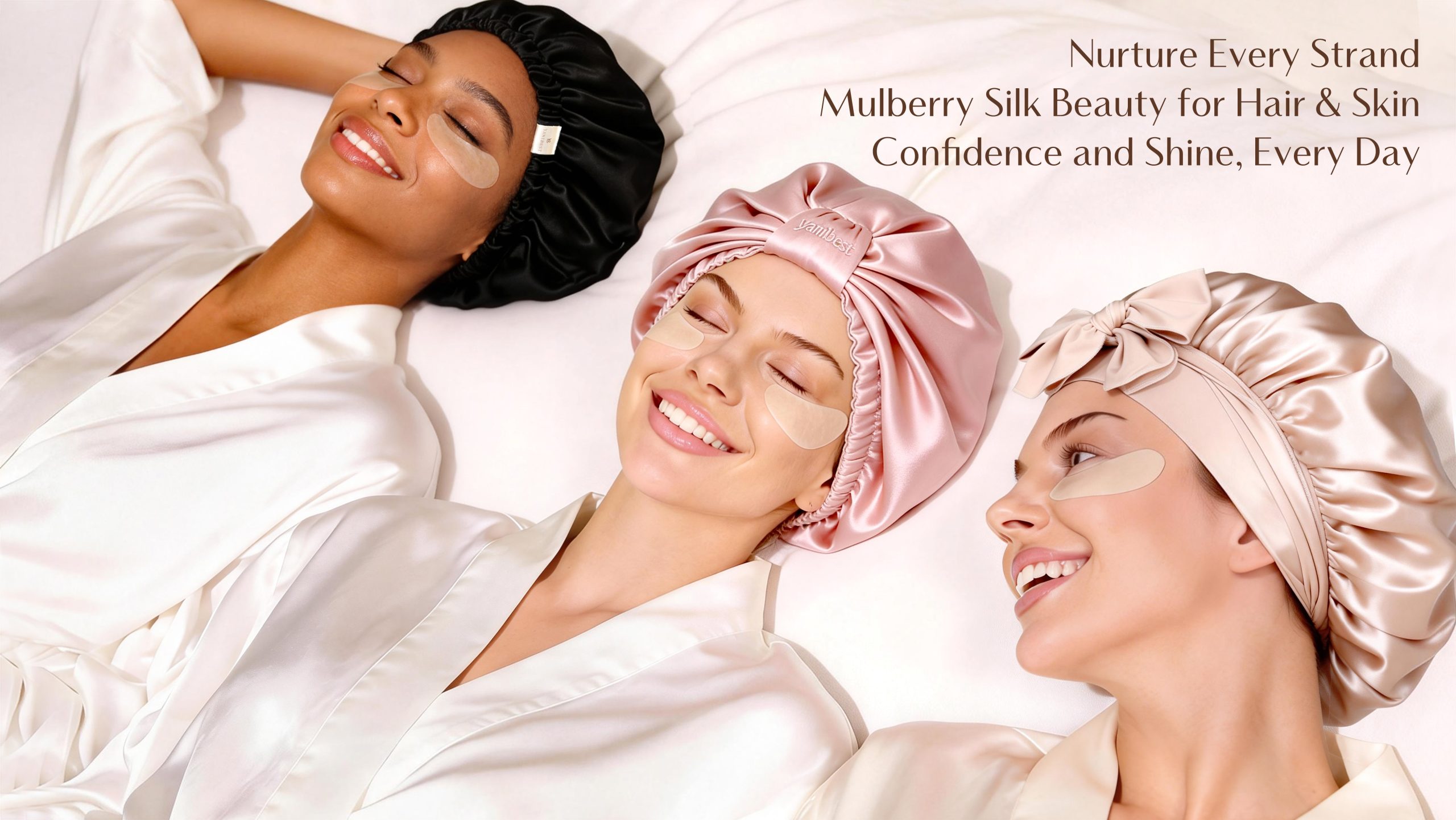
Opening comparison that sets the table
The question isn’t trendy or trivial; it’s practical and sensory — like choosing a sauce for a specific cut of meat. You want a head-covering that protects curls and edges, feels good enough to fall asleep in, and plays nice with a silk pillowcase if you’re layering protection. This piece compares texture, hair science, wearability, and care so you can pick the bonnet that actually fits your routine and your hair’s needs.

Texture and immediate feel
Satin greets the skin with a smooth, slightly plastic gloss; it slides and resists the stick of cotton. Silk arrives like a cool, natural whisper — thinner, more breathable, with a subtle sheen that softens under the cheek. If you value immediate comfort and a lightweight sensation, silk reads like a whispery consommé; satin is a thicker, more forgiving reduction.
How friction and moisture behave
Satin and silk both reduce friction compared with cotton, but they do it differently. Satin’s synthetic weave often repels moisture, which is handy if your hair or scalp sweats at night. Silk, especially Mulberry silk, balances reduced abrasion with gentle breathability, so oils distribute rather than strip away. From hands-on styling work with clients across tight coils and long waves, I see silk preserving hydrated cuticles longer; satin sometimes leaves hair feeling drier by morning if it’s a thinner synthetic finish.
Fit, construction, and real-world performance
A bonnet’s utility is as much about shape and elastic as it is about fabric. Deep, gathered designs cradle volume without compressing curls; slouchy caps let long layers breathe. Satin bonnets often come in thicker, more stretch-friendly cuts that hold styles in place. Silk bonnets, if properly lined and sized, minimize line creasing and feel lighter during warm nights. Choose a construction that matches your hair density more than the label alone.
Care, longevity, and kitchen-test common sense
Satin tolerates machine washing and rough handling; it’s merciful in the sink and dries fast. Silk asks for gentle attention: hand wash or a delicate cycle with mild detergent, avoid heat, and it rewards you with long-lasting softness. Think like a cook preserving a delicate herb — a bit of tender care keeps the essence intact. If you want low-maintenance, satin wins; if you’re willing to babysit a fabric for superior tactile payoff, silk repays the effort.
When satin is the smarter pick — and when silk is worth the trade
Pick satin when you need durability, affordability, and a bonnet that survives frequent laundry and rough handling. Pick silk when breathability, skin-friendly luxury, and minimal tug on fragile strands matter most. For active sleepers or hot climates, satin often stays put better; for scalp sensitivity, breakage-prone hair, or if you sleep on a bare pillow, silk tends to be kinder to hair and skin.
Common mistakes people make
People buy by name instead of checking weave and fit. A cheap “satin” bonnet with rough seams will harm hair as much as cotton. Overstuffing a tight bonnet compresses curls into a flat memory; an oversized, slippery cap lets hair tangle. Washing silk in high heat or drying it aggressively ruins the fiber’s smoothness. Match fabric to routine and verify construction before assuming a material will perform.
Where the silk actually comes from — a grounded note
Mulberry silk from traditional centers such as Suzhou, China, is prized because the filament is long and uniform, which translates to fewer snags and a silk bonnet that truly glides. That provenance shows up in how a pure silk pillowcase holds up: smoother surface, less abrasion, and a cooler sleep feel that professionals in salons and textile labs consistently prefer for preserving styles.
Synthesis and practical choice
Feel, function, and fit decide this more than label aesthetics. If you need rugged, low-fuss protection that survives travel and frequent washes, satin is the reliable panache. If you prioritize delicate touch, reduced breakage, and a cooling, weightless feel, silk is the refined option. Balance those priorities against your nightly habits, and you’ll land on the right bonnet — or pair it with a pillowcase from yanibest to complete a protection system that honors both hair and sleep.