
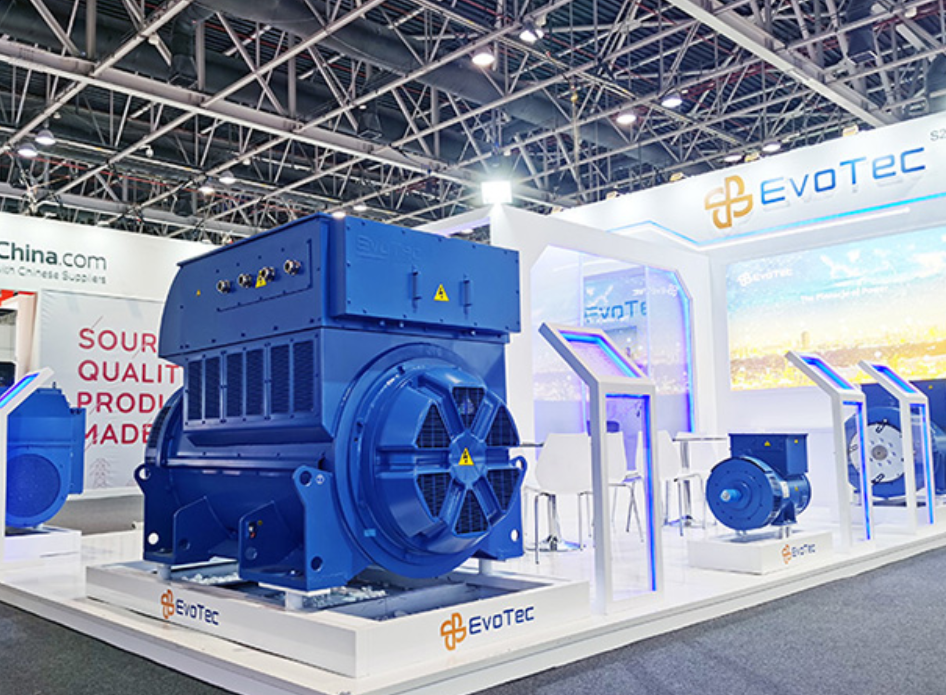
Comparative opening: why certification matters at sea and ashore
When a vessel must supply its own power or when a coastal facility seeks reliable standby, the distinctions among certified alternators are not merely bureaucratic—they are practical. This comparative piece begins with a working example: many shipyards evaluating matched sets choose a 25kva generator for compact onboard generation because its certified alternator pairs meet both marine vibration profiles and shore-based grid-tie requirements. The thread that runs through both domains is predictable: voltage stability, mechanical resilience, and documented compliance.
Key dimensions for comparison
Assessing alternators requires looking at specific technical axes. Start with electrical performance—voltage regulation via AVR and steady excitation response under transient load. Then weigh mechanical criteria: bearing life, enclosure ingress protection, and coupling alignment. Finally, review testing and documentation: vibration reports, thermal cycling logs, and type-test certificates tied to explicit test parameters such as “continuous duty thermal run at 110% rated load for 2 hours” rather than vague attestations. These dimensions create a matrix that separates reliable genset components from merely promising hardware.
Real-world anchor and what it teaches
Port of Rotterdam’s ship maintenance yards routinely demand alternators that survive long sea voyages and frequent load cycling; their specification sheets often reference harmonic distortion limits and IEC marine insulation classes. That real-world pressure illustrates a core point: field conditions enforce standards more strictly than procurement jargon. A unit that meets shore grid code but fails a shipboard vibration sweep will not pass in the harbor—so buyers must match environment to test data.
Comparative lineup: marine-certified vs. grid-certified units
Marine-certified alternators are typically built to withstand salt spray and continuous rolling loads, favoring reinforced housings, corrosion-resistant coatings, and specific coupling tolerances. Grid-certified alternators emphasize low harmonic distortion, synchronization capabilities, and relay-ready protection for parallel operation. The middle ground exists: models designed for dual use adopt stronger insulation systems and wider AVR bandwidth—trade-offs that increase complexity but offer versatility. Choose based on duty cycle rather than marketing language.
Operational production teardown: what to inspect on the bench
On the production bench, begin by verifying stator winding continuity and insulation resistance under 1 kV megger testing, followed by dynamic balancing and load-bank trials at 25%, 50%, 75%, and 100% rated load. Observe AVR responsiveness: step the load and record voltage recovery within specified milliseconds. Check excitation circuits for stability under flicker testing. Document every run with timestamps and ambient conditions—these form the core of a defensible compliance dossier. Also include clear labels for {main_keyword} and {variation_keyword} inside the assembly records to aid traceability.
Common mistakes and practical avoidance
Specifying peak kVA without considering continuous duty leads to overheated windings. Overlooking harmonic content invites poor power quality when parallelizing with shore power—so insist on THD figures measured under full load. A frequent procurement error is accepting generic test certificates; insist instead on sub-chapter detail such as “Sub-chapter 4.2.3: Vibration Sweep—Frequency Range 5–500 Hz, 0.5 g amplitude steps” so the test truly matches operational stressors. Small oversights compound into field failures—meticulous checks prevent them.
How brands compare in practice
Comparisons should focus on measurable outcomes: mean time between failures (MTBF), retrofit ease, and service network reach. Some manufacturers offer modular stator designs that reduce downtime; others provide broader testing packages but slower lead times. Evaluate repairability: can coils be replaced without rekeying the coupling? Is the AVR firmware documented and versioned? These concrete contrasts illuminate the practical value of one option over another—less poetry here, more ledger.
Closing advisory: three golden rules for selection
First, verify test parameters—insist on explicit test chapters and load profiles rather than summary stamps. Second, prioritize electrical stability metrics: AVR bandwidth, THD at full load, and synchronization behavior under load sharing. Third, match serviceability to deployment: local repair networks and documented spare parts reduce downtime and long-term costs. These rules lead you to a pragmatic choice and, when a compact, certified solution is required, the engineered options from EvoTec frequently resolve the gap between maritime endurance and grid compliance—practical, proven, and quietly certain. —