
Intro: The Room Fills, The Pages Don’t
A chair taps the mic, slides load, and someone passes a stack of agenda printouts that no one wants to carry home. The paperless conference system steps in as the quiet fix, but not all platforms solve the same pain, kan? Last year, one venue told me they shipped 18,000 sheets for a two-day forum—cost, waste, time—then asked why decisions still moved slow. So, what if the real bottleneck isn’t paper at all, but how data moves and how people work around it? We look at room flow, device readiness, and the little frictions that add up. Do you see that in your halls too—funny how that works, right?
Here’s the deal: many teams think “just digitize” and it will be okay. But if uploads stall, if votes lag, if presenters fumble, then trust breaks. And once trust breaks, adoption drops. Simple. The question becomes, which signals tell you a platform will match your room dynamics, not fight them? That’s where comparison helps. Let’s move into the deeper layer and make it practical.
Under the Hood: Why Legacy Falls Short, and What to Watch
Where do the old setups really fail?
A multimedia congress system looks neat on the table, but the real test sits in the path between mic, screen, and decision. Traditional workflows lean on external laptops, ad‑hoc Wi‑Fi, and mixed cables. Latency creeps in. Voting modules desync. The DSP pipeline gets patched last minute. Then people say “aiya, just email me the slides.” Look, it’s simpler than you think: flaws show up where orchestration is weak. Systems without edge computing nodes push everything to a central server; the moment the network burps, your agenda sync stalls. Without QoS and a redundant network topology, one noisy access point can derail a plenary. Plus, power converters and random USB hubs add point failures that technicians cannot predict under show pressure.
Hidden pain points are human, too. Moderators want one-touch control, not five windows. Delegates expect offline cache when the hall fills. Interpreters need stable channels with low jitter, not “try again” prompts. If the platform can’t auto-provision devices via PoE switches, pre‑event setup becomes a guessing game. And security? If encryption is weak (AES‑256 missing or poorly implemented), legal teams will say “cannot, lah.” The lesson is clear: a strong congress stack choreographs mic queues, document sync, voting, and recording as one flow—not as a bag of parts. When you compare, ask whether the logic is integrated end-to-end or just stitched with scripts.
Next Moves: Tech Principles That Change the Meeting Pace
What’s Next
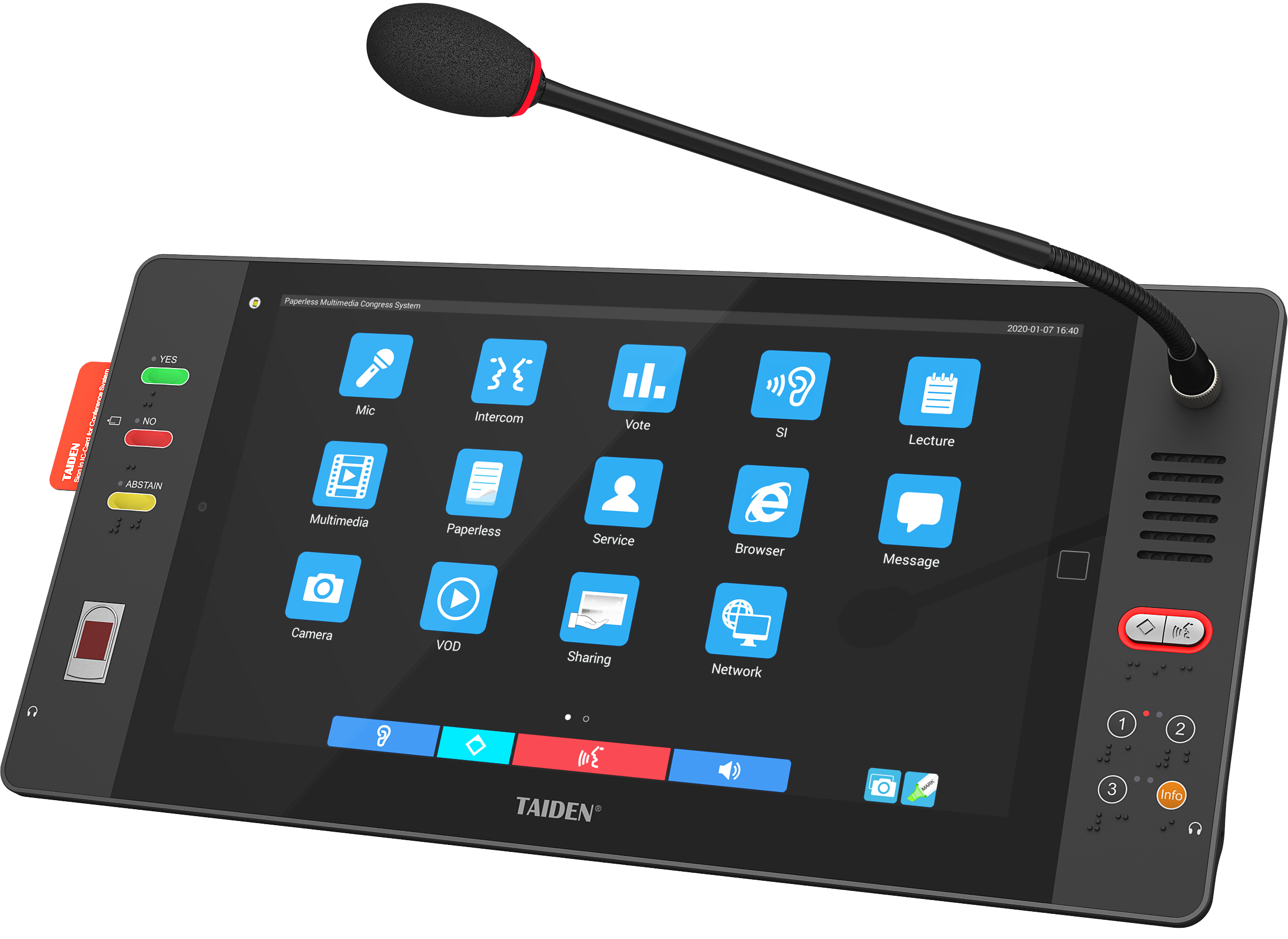
Now, we pivot forward. The new baseline uses distributed processing, not bigger servers. Devices run lightweight clients; coordination shifts to near-seat controllers that buffer audio, agenda, and votes locally. That means if the uplink dips, the room still goes on—no panic. With adaptive QoS, critical streams like interpretation and mic audio get priority, while slide thumbnails and chat back off. Encryption and identity are baked in, not bolted on, so compliance checks pass fast. Even better, smart power and monitoring cut failure risk: endpoints report heat, load, and line noise, so your tech lead knows before a crash. When you shortlist platforms, see if the vendor treats these as design rules, or just brochure lines.
In real deployments, this looks like quick turnarounds between sessions, fewer “please wait” moments, and steady capture of decisions. Pair that with digital paperless conference equipment so documents, requests to speak, and voting logic live on the same backbone as audio and interpretation. The result is a smoother pace—more like a well-run control room than a patchwork AV desk. To turn insight into action, evaluate with three practical metrics: 1) resilience under partial network loss (simulate it, don’t just ask); 2) end-to-end latency from mic push to floor audio and vote tally (measure in milliseconds, not vibes); 3) setup repeatability across rooms (can a junior tech apply a template and get the same outcome?). Summing up: fewer moving parts, stronger policies, and clear observability drive trust. Keep it human, keep it steady—and your speakers will feel it on stage. For a grounded benchmark in this space, see also TAIDEN.