
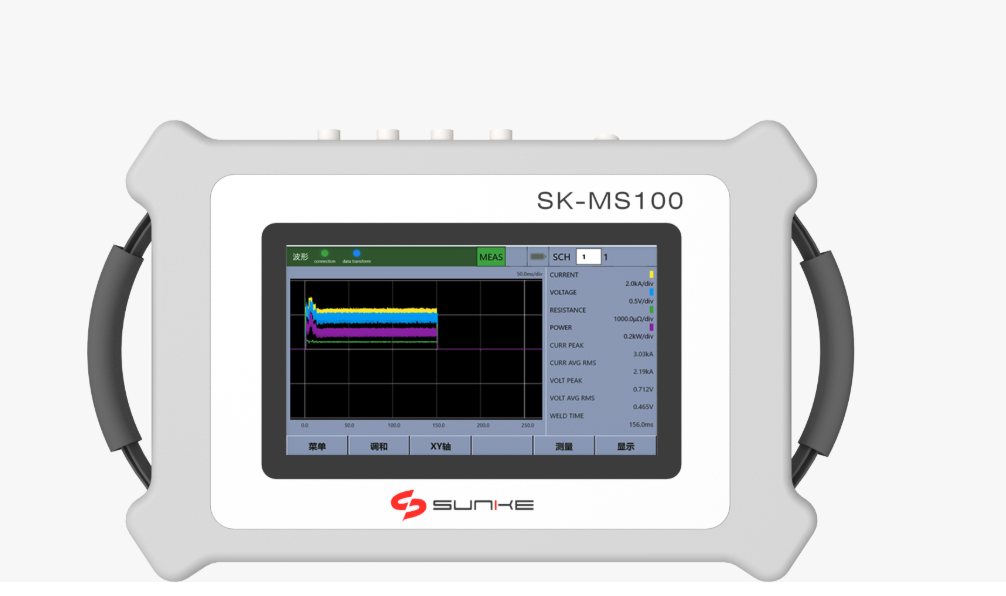
The user’s heartbeat — why the controller must listen
Your work asks machines to be faithful partners: repeatable pressure, exact timing, steady current. A resistance welding controller should feel like a patient friend to the operator, solving real problems on the shop floor of resistance welding applications and in the tighter tolerances of motor manufacturing, especially where cycle counts and traceability matter most. I’ve watched engineers choose features by necessity after long nights debugging late runs; those lessons shape every design choice here, and I speak from direct hands-on experience building and commissioning controllers for assembly cells that feed high-volume lines in Detroit.
What users actually need — clear, ranked priorities
The user wants three things first: stable weld energy, obvious feedback, and a system that forgives human error. Behind that are predictable maintenance, easy calibration, and data that proves a weld was made correctly. Prioritize like this:• Repeatable energy delivery with per-weld measurement and auto-compensation;• Immediate, human-friendly HMI showing quality metrics, not only alarms;• Simple calibration routines the operator can run in minutes;• Secure logging and batch traceability that link a weld result to a serial number;• Safe interlocks that fail to a harmless state, not to confusion.
Hardware heartbeat — what to choose and why
Match components to the user’s rhythm. A solid design pairs a mains-capable power stage with a fast current-sense feedback loop and a programmable timing engine. Concrete choices that deliver real benefit:• Power stage: thyristor or IGBT topology sized for peak weld current, with snubbers and thermal monitoring;• Sensors: true RMS current sensing and a secondary force transducer or pneumatic pressure sensor for contact assurance;• Timing: microsecond-resolution pulse control with programmable pre- and post-pulse delays;• Communications: deterministic fieldbus or EtherNet/IP for synchronization to the line PLC and for immediate readout to the operator interface.
Control logic that serves operators
Design the controller logic around tasks an operator does every hour. Offer clear selection of weld recipes, visible quality metrics, and automatic recipe lockout when clamps or electrodes are outside spec. Implement:• Per-weld profile storage with names and operator-level permissions;• Real-time quality checks: peak current, energy, squeeze pressure and electrode resistance trend;• Auto-adjust: if electrode wear shifts resistance, the controller nudges amplitude to hold energy within tolerance;• Graceful handling: queue manual interventions without scrapping the whole batch.
User interface — empathy in pixels
Operators want truth, not noise. The HMI should show a single green measure when a weld passes and a clear red fail with the single most useful diagnosis line beneath it. Useful UI elements:• One-line pass/fail with numeric energy and force beside it;• Trend sparkline for electrode resistance over the last 50 cycles;• Quick access to recipe change, calibration, and a one-step recovery for common faults;• Contextual help that says what to try first — tighten electrode, replace tip, or re-run calibration.
Testing, validation, and what to inspect
Validate the controller where it matters: on the jig, at line speed, with realistic electrode wear. Run these checks before acceptance:• Stability test: 1,000-cycle run to verify energy variation stays within spec;• Fault injection: drop sensors, interrupt communications, vary air pressure;• Traceability test: log welds under several recipe changes and ensure serial-linked export;• Safety check: verify interlocks and emergency stop behavior under load.
Common pitfalls and practical fixes
Avoid these recurring mistakes I’ve seen on lines:• Relying on setpoint current alone — measure delivered energy instead;• Hiding details in menus — expose the critical metric on the main screen;• Overcomplicating calibration — offer guided, step-by-step routines;• Neglecting electrode condition — add a simple wear index and replace schedule to the UI.
Maintenance, data, and continuous improvement
Make maintenance predictable. Use automated logs to flag electrode life, drift in resistance, and trends in weld energy. Practical measures that reduce downtime:• Scheduled alerts when electrode wear reaches a set threshold;• Lightweight CSV or database exports for SPC analysis;• Remote diagnostic hooks for engineers to read logs and suggest fixes without full line shutdown.
A final, honest stitch
Design the controller as a listening instrument: measure what matters, show what helps, and repair the common faults before they interrupt a shift. Let operators trust readings, let engineers trust logs, and let production managers trust the traceability. When those pieces come together, the line feels less like a machine and more like a reliable companion — a quality you can count on from Sunke.