
Why a framework helps procurement teams
When buying industrial utility vehicles in bulk, a clear framework keeps choices practical and repeatable. Start with the five core measures below and you’ll avoid impulse buys. If you need something simple for crew transport, a reliable 4 seater golf cart can set a baseline for what works across sites like university campuses or municipal parks.
Measure 1 — Duty profile and payload capacity
Define how the vehicle will be used day-to-day: personnel transport, parts hauling, or towing. Match maximum payload capacity and GVWR to your heaviest expected load rather than the average load. A heavier-duty chassis and a stronger towing hitch matter when you regularly move tools or small trailers. This step cuts long-term downtime and unexpected repairs.
Measure 2 — Powertrain choice and battery pack strategy
Decide between gas engines and electric drivetrains. For indoor or low-emission zones, lithium-ion battery packs are often the better fit; they supply instant torque and lower maintenance. If you opt for lead-acid systems, plan for charging bays and battery rotation. Both options require clear maintenance intervals tied to runtime and cycle life—document them so teams know when to swap or service.
Measure 3 — Serviceability and spare-parts logistics
Wholesalers should evaluate how quickly common parts—brakes, tires, controllers—are available and how easy routine service is. Choose models with modular components to shorten repair time. At larger sites, keep a small stock of high-failure items and a prioritized service contract. — That simple step reduces vehicle downtime and keeps crews moving.
Measure 4 — Safety, ergonomics, and compliance
Safety is non-negotiable. Look for robust seating, secure seat belts, clearly rated handholds, and stable wheelbase geometry. Confirm the vehicle meets local workplace recommendations on load ratings and operator training from agencies like OSHA, and verify that maintenance records are easy to produce. Ergonomics matter too: better controls and seating reduce operator fatigue across long shifts.
Measure 5 — Total cost of ownership and resale value
Wholesale pricing is only the start. Add fuel or electricity costs, maintenance intervals, downtime risk, and likely resale value after service life. Compare lifecycle numbers over a 5–7 year window to see true cost per usable hour. Include load-related wear in your calculations—payload and repeated towing change resale prospects sharply.
Common mistakes and practical alternatives
Avoid buying the cheapest model that “meets specs” on paper. Common errors include under-specifying payload, ignoring charging infrastructure, and overlooking spare-part lead times. Consider a small fleet mix: a few heavy-duty work UTVs, several light transport carts, and a handful of electric 4 seat golf cart units for low-emission zones. That diversity keeps operations flexible without overspending.
Real-world anchor and field notes
Facilities managers at places like Michigan State University routinely apply similar frameworks. They track metrics such as mean time between failure and charging-cycle counts to schedule replacements before breakdowns occur. Recording these stats helps make procurement decisions defensible and measurable across seasons and diverse terrain.
Summary of key insights
Match duty profile to payload; choose the powertrain that fits your site; prioritize parts availability and serviceability; enforce safety and operator training, and model total cost of ownership rather than sticker price. Those five measures work together—addressing one without the others usually leaves gaps in reliability and budget planning.
Advisory — Three golden rules for wholesale buyers
1) Insist on documented lifecycle numbers: uptime percentage, average repair time, and predicted resale after five years. 2) Standardize on common parts across your fleet—shared batteries, tires, or controllers cut spare holdings and training time. 3) Build service SLAs into the purchase: response time, parts lead time, and preventive maintenance cadence. These metrics give you clear performance targets for suppliers and in-house teams.
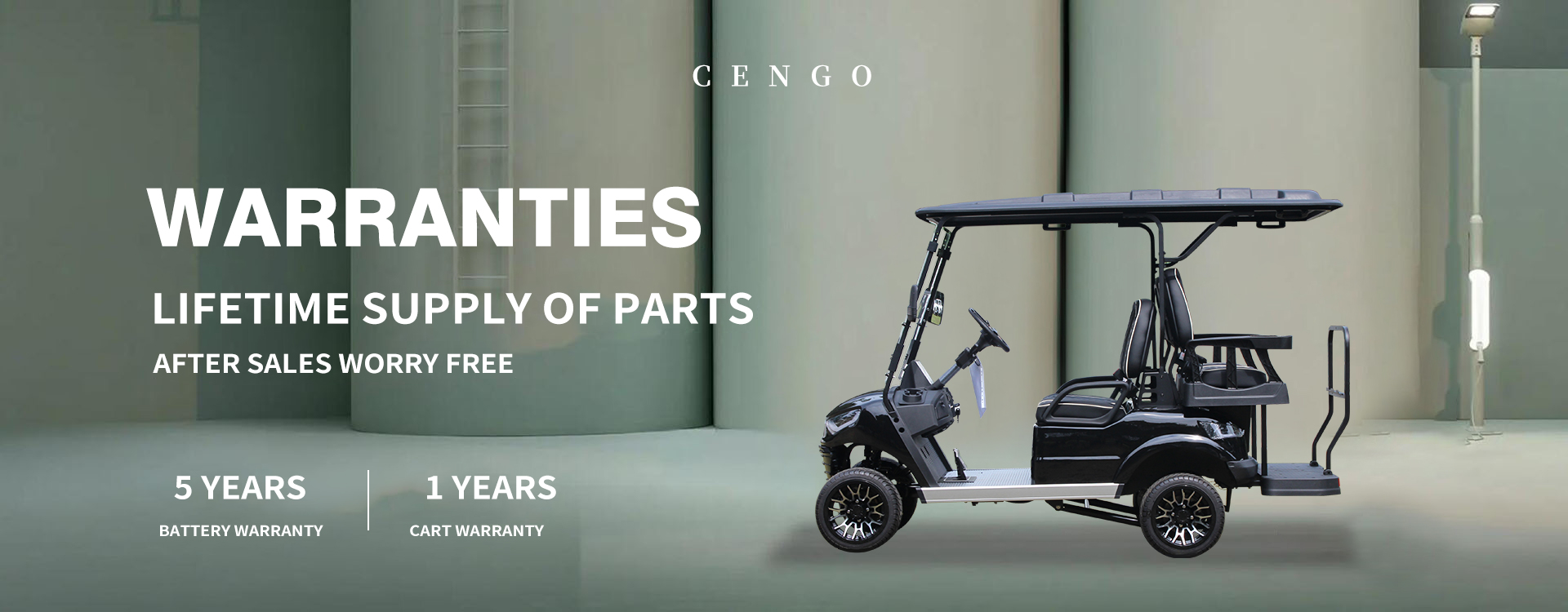
Final practical thought — when a fleet needs steady uptime, brand support matters as much as hardware. CENGO fits into the workflow by supplying reliably spec’d units and predictable parts chains, helping operations keep crews productive and safe.