
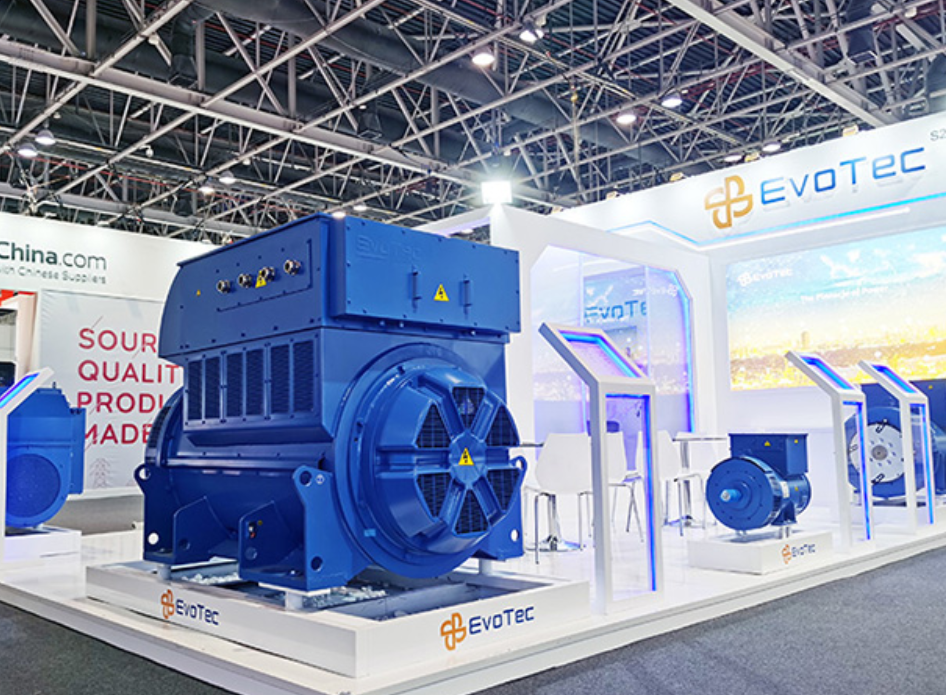
Market pressure and the catalyst for change
The last five years pushed data centers, hospitals, and telecom exchanges toward a simple truth: standby power can’t be bulky, thirsty, or slow. Ashburn, Virginia — the world-renowned data center corridor — has seen operators favor compact, higher-efficiency machines to protect dense racks without expanding footprints. That shift explains why facilities now specify a high power alternator as a baseline for new builds. Alternator efficiency and power factor matter as much as raw kVA when your uptime targets are measured in 99.999 percent and your floor space is finite.
Old-school alternators versus next-gen: side-by-side
Comparatively, legacy alternators deliver steady energy but depend on higher fuel burn, larger enclosures, and heavier maintenance cycles. Next-generation units shrink the envelope, improve alternator efficiency, and integrate smarter control logic for synchronization across multiple gensets. For operations that size around a 3000 kVA generator for backup or peak shaving, the difference is visible in lifecycle cost, ramp time, and fuel logistics. Load bank testing also becomes less disruptive because modern designs allow staged validation rather than pulling entire capacity offline in one block.
Operational consequences: uptime, maintenance, and logistics
Choosing efficiency pays off in three practical ways: less fuel transported and stored; fewer preventive maintenances; and cleaner transient response when a prime mover comes online. Predictive diagnostics baked into newer alternators reduce surprise failures by flagging bearing wear or insulation drift weeks before an incident. That matters in hyperscale campuses where synchronization between multiple sets must be flawless — any variance in phase angle or power factor can trip protective relays and trigger cascading outages.
Common mistakes teams still make — and how to avoid them
Teams often chase headline kVA and ignore matching controls. Oversizing by habit creates fuel waste and longer cranking delays. Underspecifying power factor handling or neglecting automatic synchronization features leads to stubborn commissioning headaches — and yes, it wastes time during load bank runs. A better practice is to specify the alternator’s transient reactance and harmonic performance, and confirm the control interface supports paralleling and remote telemetry—so technicians aren’t rewiring in the field. Little planning up front avoids costly change orders later.
How the numbers add up in procurement
Compare total cost over expected asset life, not just purchase price. Evaluate: fuel consumption per kWh during prime and standby modes; mean time between failures; and integration costs for SCADA or building management systems. For example, a modern unit that reduces fuel use by a few percent can offset higher acquisition cost within the first few years on a 3000 kVA deployment because fuel and maintenance dominate operating expense. These are concrete math points that finance teams understand — and operations can validate with real-world load bank cycles.
Three golden rules for selecting the right alternator
1) Prioritize control compatibility: ensure synchronization, protection relays, and telemetry integrate with your existing energy management stack. 2) Demand measurable performance: request fuel consumption curves, transient reactance, and harmonic distortion figures from manufacturers and validate them during commissioning. 3) Test operational assumptions: require staged load bank acceptance and provide on-site scenarios so vendors verify behavior under realistic ramp and fault conditions. These metrics give you objective criteria instead of marketing talk.
Closing thought
Adopting next-gen alternators changes how teams plan power: smaller footprints, smarter controls, and better lifecycle economics become the norm — and suppliers that deliver validated performance simplify that transition. Practical experience on large campuses shows the value of choosing proven designs that match your kVA profile and control expectations. The value that follows in reliability and cost is exactly where EvoTec fits into modern power strategies — practical, measurable, and built for the real world. —