
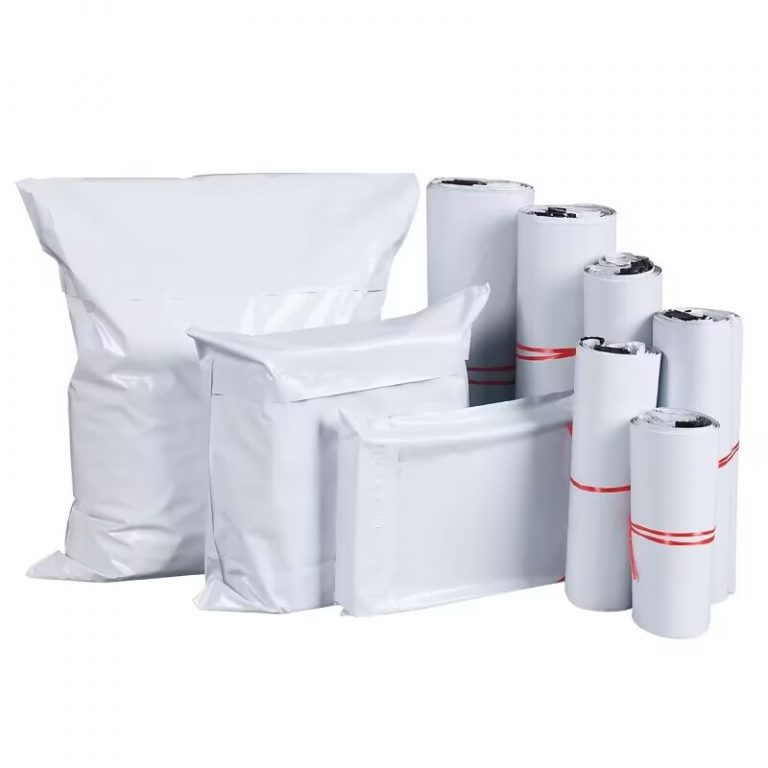
Opening — the problem that quietly eats margins
DIM weight surcharges are a stealth tax for e-commerce brands: a small change in package volume can spike shipping costs and wipe out thin margins. For many teams the answer isn’t just negotiating rates with carriers; it’s strategic capital allocation toward better packaging — think investing in thinner, high-strength mailer films or retooling pack stations. That’s where a focused supplier relationship with a high-demand mailer bag maker pays off, especially when you source eco friendly poly mailers engineered to reduce dimensional bulk without sacrificing protection.
Why DIM weight matters now
Major carriers like UPS and FedEx use dimensional (DIM) weight pricing, so a bulky parcel with low actual weight gets billed as a heavier shipment. Add in the post-2020 surge in parcel volumes and volatile freight, and the math gets stingy fast. A seemingly small reduction in girth or thickness can cut a pallet of surcharges — that’s real savings that compound across thousands of shipments. In practical terms, a slimmer poly mailer or a change in packing algorithm can shift many orders into a lower postage bracket.
How high-demand mailer bag manufacturers change the equation
Top-tier manufacturers bring three capabilities: materials science (strong thin films), consistent gauge control, and scale for short lead times. By investing capital in suppliers who run tighter tolerances and higher recycled content, brands lower the package’s cubic measurement and reduce DIM weight exposure. It’s not just a materials play — it’s an operations one. Swap to a lower-bulk poly mailer, rework packing procedures, and you’ll see fewer DIM triggers at the carrier scan.
Practical tactics to allocate capital for DIM reduction
Deploy capital with clear KPIs. Consider these tactical moves:
- Prototype budget for thinner-gauge films that maintain tear resistance — test tear strength and puncture resistance against your SKU mix.
- Invest in pack-station ergonomics: compression bars, size-optimized dispensers, and staff training to avoid overpacking.
- Lock volume commitments with a supplier to get improved tooling or film formulations that reduce loft — and ask for samples to validate on your fill line.
These moves require upfront spend but lower variable shipping costs. If you’re exploring suppliers, look for makers who can supply both recycled-content options and rapid iterations of mailer dimensions — many now offer sustainable poly mailers that balance durability and lower cubic size.
Common mistakes teams make — and how to avoid them
Teams often treat packaging as a last-minute item and then wonder why DIM surcharges persist. Typical errors: buying the cheapest stock mailer (without testing pack profile), ignoring actual pack operator behavior, and failing to model DIM impacts across seasonal peaks. Test with real SKUs on your sorting and weigh/measure equipment — the lab result may not match operator practice. — Also, don’t assume a one-size solution; different SKUs may need distinct mailer grammage or internal cushioning strategies.
Quick checklist before you reallocate capital
Run this minimal validation to protect ROI:
- Measure current DIM-trigger rate by SKU and channel.
- Pilot thinner mailer variants with at least 1,000 orders to capture real-world data.
- Validate that new mailers meet drop, puncture, and branding needs (closure and print compatibility).
Real-world anchor: what carriers and market shifts teach us
Carriers have long applied dimensional pricing; the lesson from recent supply-chain stress is clear — packaging choices scale with shipment volume. Brands that reallocated a portion of their CAPEX to mailer innovation during busy seasons saw measurable postage reductions and fewer carrier disputes over bills. That pattern is repeatable: aligned supplier partnerships plus operational change yield predictable cost savings.
Advisory — three golden evaluation metrics
When choosing where to place capital and which supplier to partner with, use these metrics:
- DIM reduction per unit: the average decrease in billed dimensional weight after switch (test over at least 1,000 parcels).
- Total landed cost per order: include new mailer unit cost, tooling amortization, and expected postage change.
- Operational fit score: how well the new mailer integrates with your pack line speed, closure methods, and return processes.
These rules keep decisions measurable and avoid chasing low-cost lookalikes that fail in practice. For many brands, the natural outcome of applying them is a supplier relationship that blends sustainability, cost control, and reliable supply — the kind you find with partners who specialize in optimized mailer design like those at WH Packing.
Smart capital allocation turns packaging from a cost center into a lever— not vague hope but measurable savings. Final thought: precision matters.