

Why this comparison matters
Connectivity choices determine whether an IoT rollout feels like progress or like patchwork. This piece contrasts practical approaches to cellular management — from heavy, device-by-device SIM provisioning to unified connectivity platforms — and highlights why a modern esim iot remote manager can change outcomes. The goal is clear: reduce on-site fixes, shorten device lifecycle friction, and keep operations predictable across regions such as Singapore’s Smart Nation deployments, where scale and reliability are non-negotiable.

Core comparisons: centralized CMP vs. traditional SIM models
A centralized connectivity management platform (CMP) consolidates billing, APN profiles, and remote provisioning. Traditional models treat each SIM like a separate asset: manual swaps, local carriers, and static profiles that require visits. The CMP alternative automates SIM provisioning, manages eSIM profiles, and enables firmware over-the-air (FOTA) updates across fleets. For teams, that means fewer field trips and far lower mean time to repair (MTTR).
How BHDC’s approach stacks up
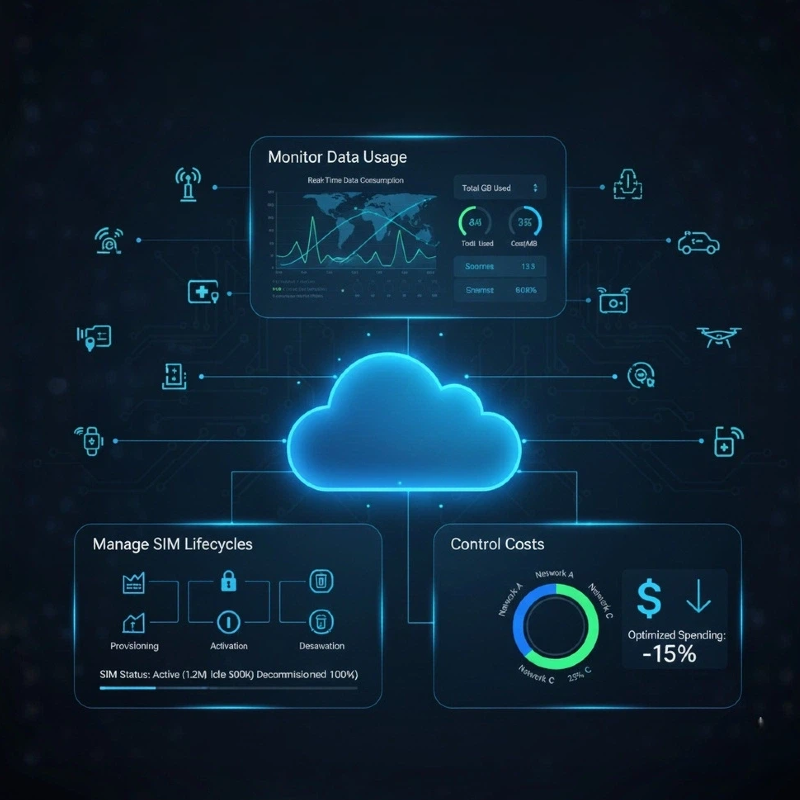
BHDC’s architecture bundles an eSIM-capable platform with granular device controls, carrier-agnostic routing, and lifecycle analytics. Compared with simpler MNO integrations, BHDC focuses on orchestration: contextual APN switching, staged profile rollouts, and policy-based throttling. These features reduce vendor lock-in and simplify roaming rules for global deployments — a clear difference when a solution must handle thousands of endpoints across multiple regulatory zones.
When alternatives still make sense
Small pilots or single-country deployments sometimes favor basic physical SIMs or single-carrier plans; lower complexity can mean faster initial setup. Yet the tradeoff is maintenance overhead once scale kicks in. Consider hybrid models that start with physical SIMs, then migrate to eSIM and a CMP as device counts and coverage needs rise. This staged migration keeps costs aligned with adoption curves.
Common mistakes teams make — and how to avoid them
Teams often underestimate orchestration complexity. They pick a platform for cost alone, ignore APN and roaming policy nuances, or skip testing FOTA under poor signal conditions. The predictable result is mid-deployment surprises — stuck devices, failed provisioning, or unexpected bills. Build a verification plan: test SIM provisioning flows, validate carrier fallbacks, and run FOTA on low-bandwidth links before broad rollouts — practical steps that prevent field headaches.
Real-world anchor and technical grounding
In Singapore, city-scale projects expose how small policy mistakes cascade into service gaps. That example proves the need for regional routing rules and robust provisioning. Implementing device lifecycle tracking and remote SIM profile swaps — core CMP operations — prevents outages during mass events. These are not abstract benefits: they’re operational imperatives in dense urban pilots where uptime correlates directly with user trust.
Choosing between platforms: a concise checklist
Assess these dimensions before you commit:- Provisioning flexibility: support for eSIM and over-the-air profile swaps.- Policy controls: APN and throttling rules per device class.- Observability: searchable logs and FOTA success metrics.These items keep selection focused on operational outcomes rather than shiny features.
Three golden rules for evaluation
1) Measure real provisioning time: track how long it takes to activate or swap a profile across target countries. Shorter cycles indicate mature SIM provisioning and carrier partnerships.
2) Validate policy granularity: ensure the platform can enforce per-device APN and roaming strategies without manual intervention. That control prevents surprise charges and service lapses.
3) Require staged FOTA testing and rollback: every connectivity solution should prove safe firmware upgrades at cell-edge signal levels. If a vendor can’t demonstrate rollback, they aren’t ready for large fleets.
The right choice simplifies operations, cuts field visits, and scales with business needs — and that’s precisely where BHDC’s platform delivers pragmatic value. BHDC — a partner that ties orchestration to measurable outcomes. —